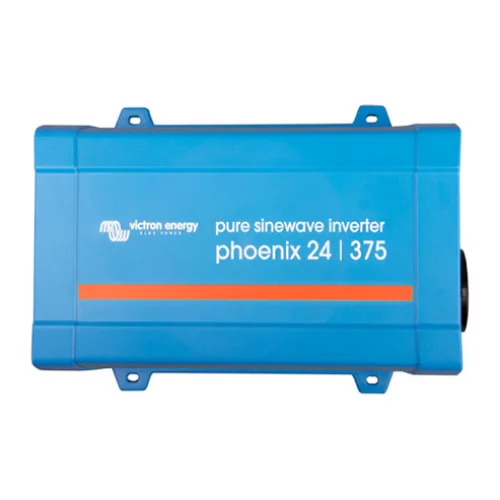
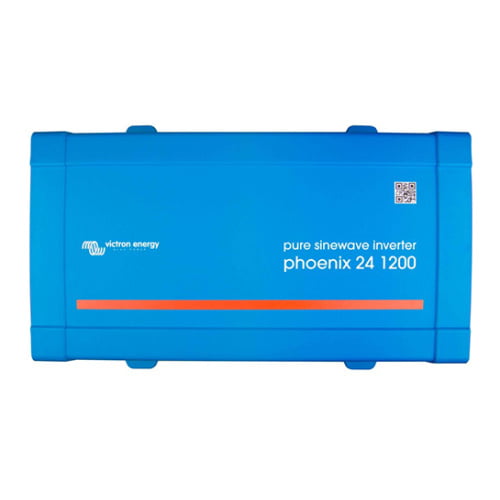
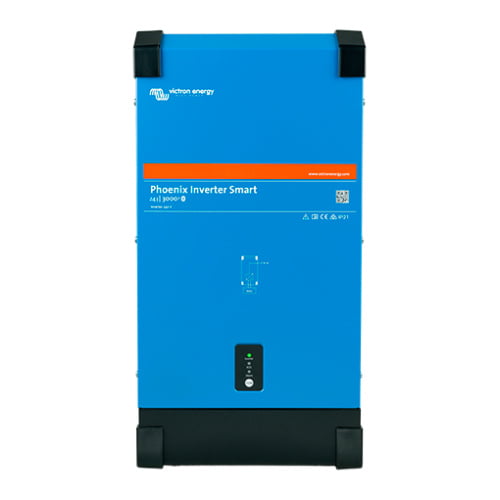
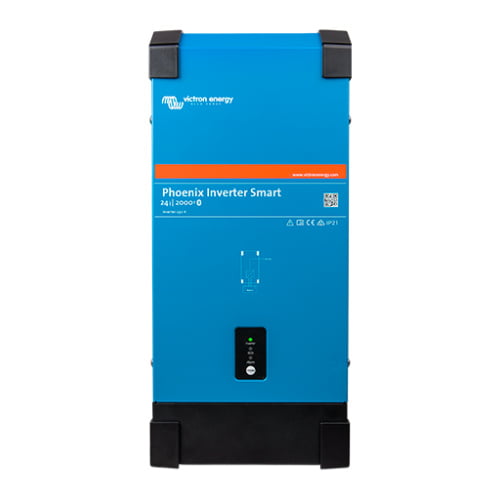
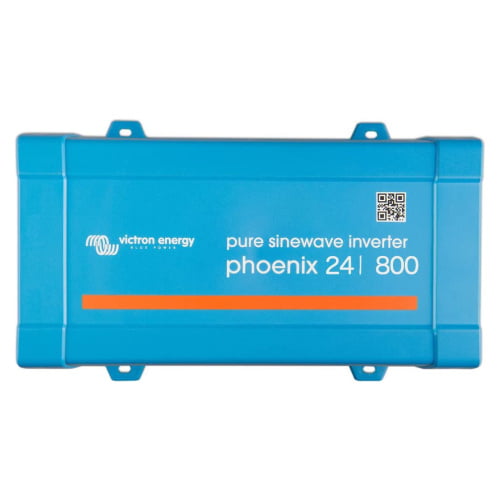
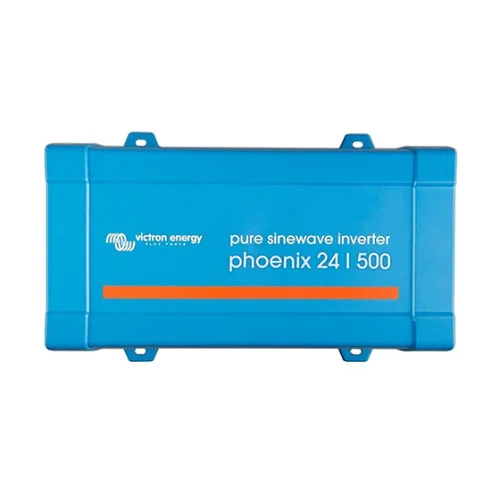
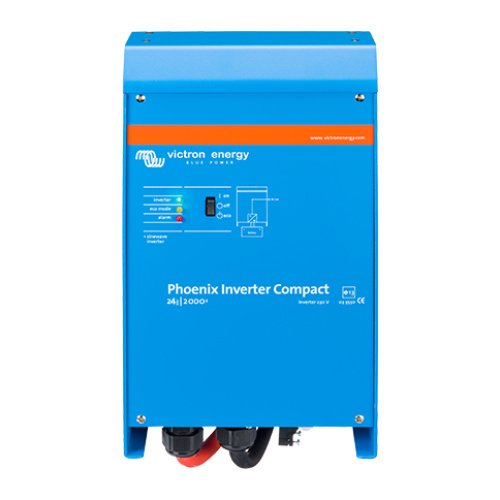
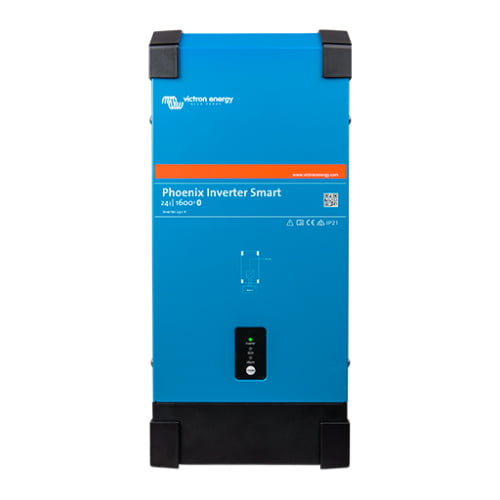
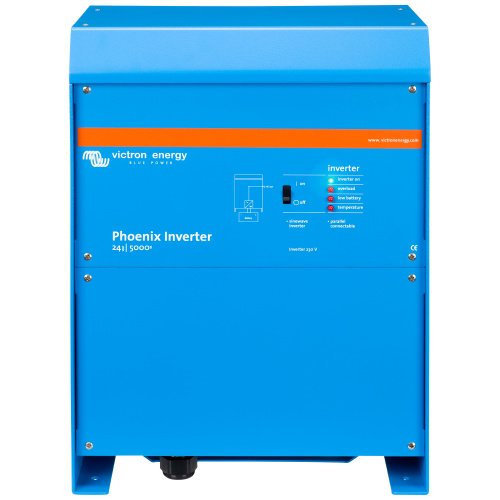
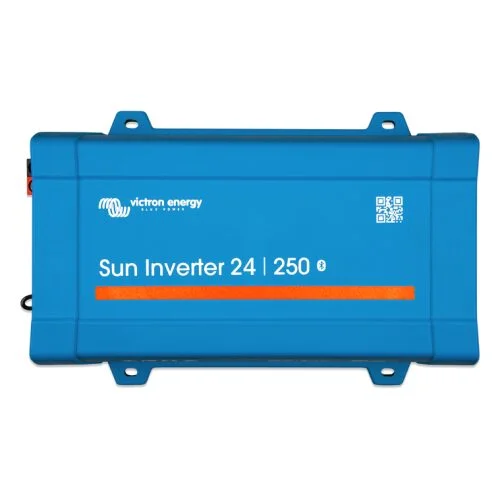
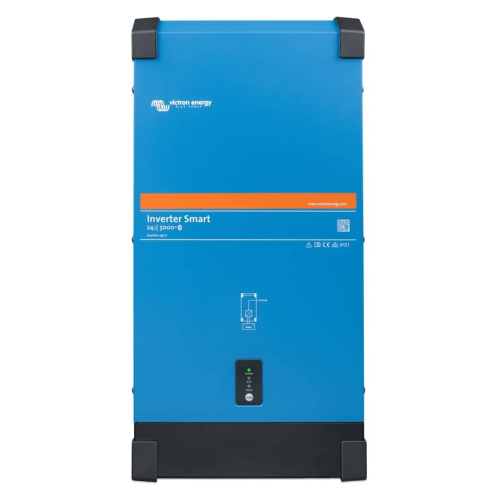
A 24 V to 220 V inverter — or 24 to 220 V transformer — converts the 24 volts from your battery bank into 230 V alternating current. Operating at 24 V rather than 12 V halves the current required for the same power output, which means you can use cables with half the cross-sectional area, suffer fewer losses, and install larger inverters without the system becoming impractical.
When is it advisable to switch from 12V to 24V?
The practical limit is around 2,000 W. A 3,000 W inverter at 12 volts draws more than 250 A from the battery; the same inverter at 24 V draws 125 A. This difference translates into 70 mm² cables as opposed to 35 mm², more manageable fuses and a significant saving on electrical equipment.
If you’re fitting out a large van, a motorhome with an induction hob or a small off-grid system, 24 V is usually the right choice. For a campervan with low power consumption, 12 V is still simpler because almost all the vehicle’s accessories are 12-volt.
Which power rating to choose
The approach is the same as for 12 V: add up the maximum simultaneous power consumption and allow for start-up peaks. A 3,000 W 24 V to 220 V converter It works on induction hobs, in the microwave or as a cooking appliance without any hassle. With a power output of between 1,200 and 2,000 W, you’re all set for normal domestic use in a motorhome.
Always check the peak power: the compressor motors in fridges and air-conditioners draw two or three times their rated power when starting up.
Pure sine wave
All our 24V inverters produce a pure sine wave, which is what any modern electronic device, motor or domestic appliance with a compressor requires. The modified waveform, which is cheaper, causes overheating, humming and a shorter service life in connected appliances.
With or without a charger
If your system frequently connects to the mains, a 24V inverter-charger It combines the inverter, the battery charger and automatic switching between mains and battery power in a single unit. This is the standard configuration in motorhomes and on boats.
What else do you need?
A bank of 24V lithium batteries capable of handling the peak current, with a cable of the appropriate cross-section — check this in the cross-section table— and his fuse next to the battery.
If the vehicle is 12 V and the system is 24 V, you will also need a 12V to 24V DC-DC converter to charge from the alternator.
We work with the range Victron Phoenix and MultiPlus at 24 V. Tell us about your setup and we’ll tell you exactly how much power you need: technical advice free.