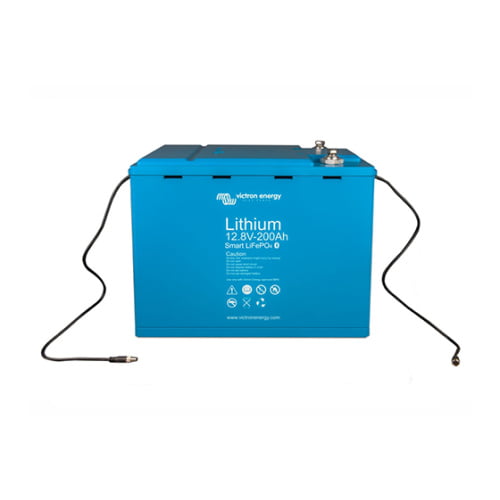
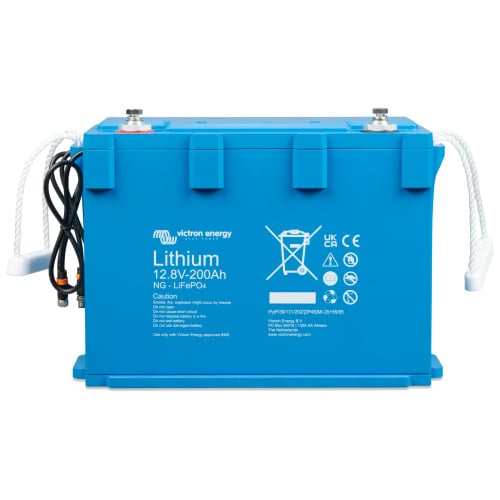
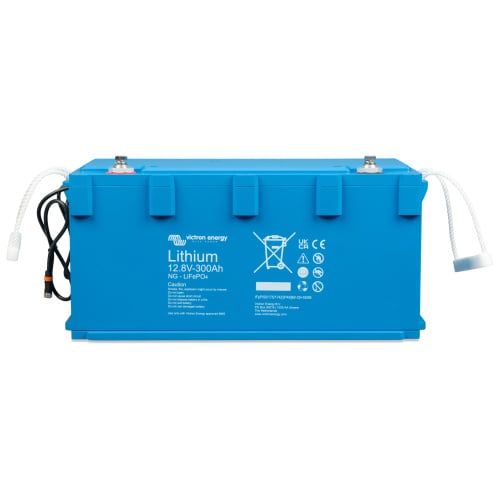
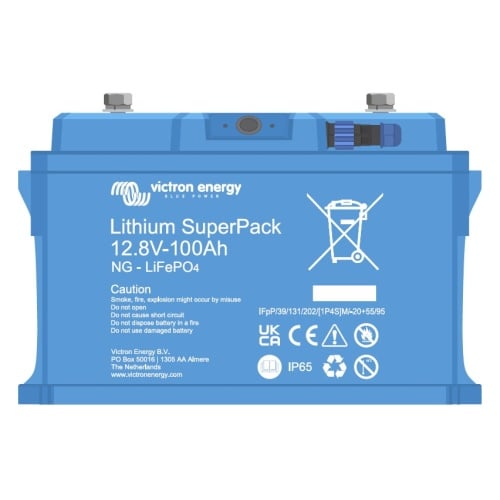
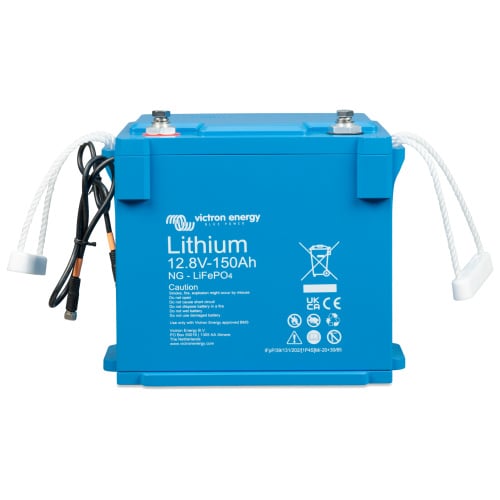
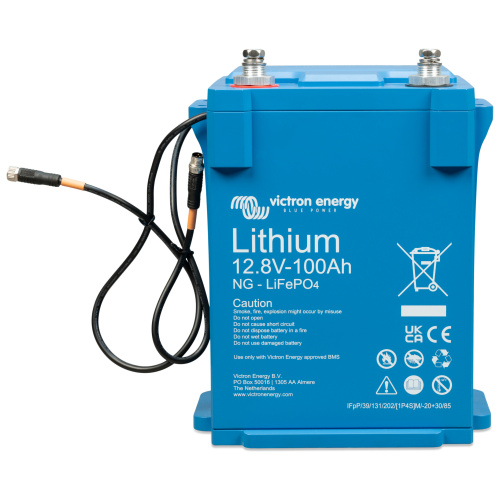
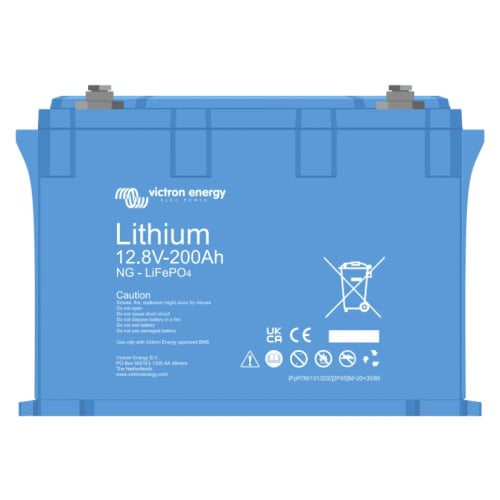
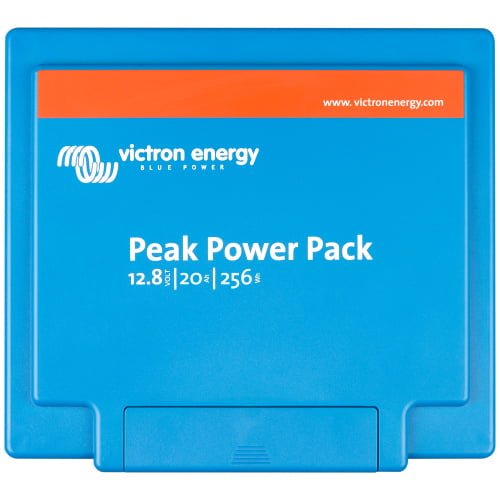
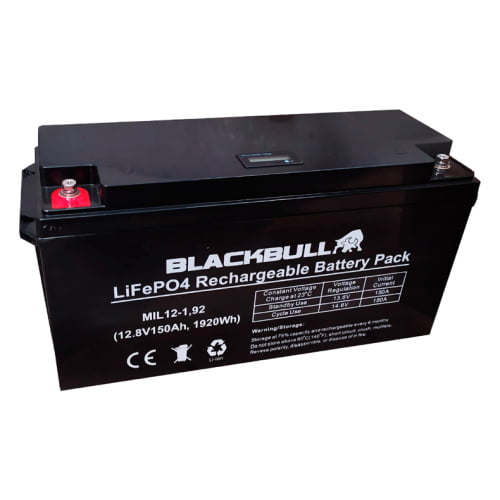
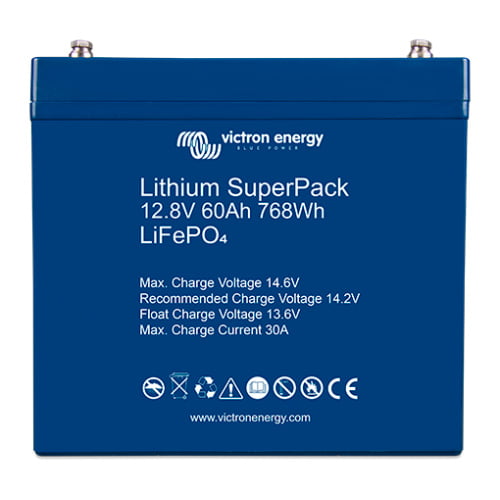
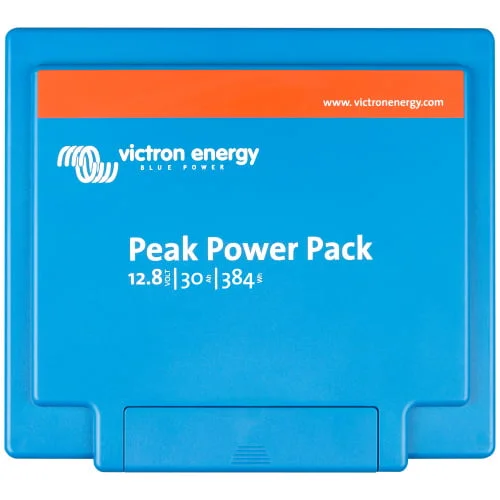
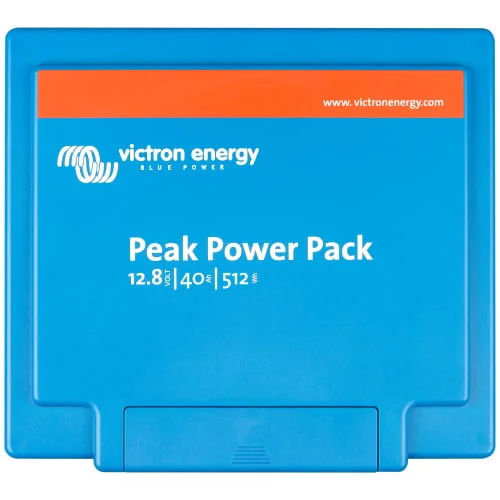
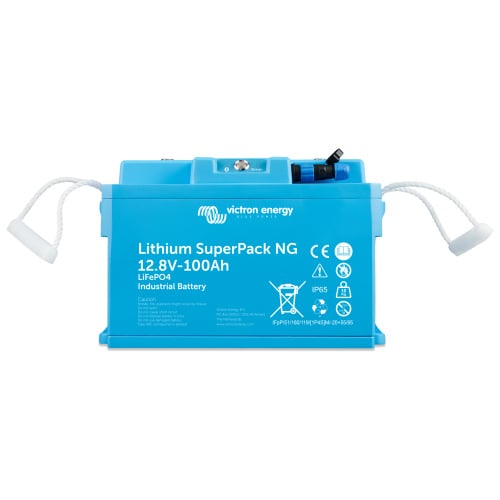
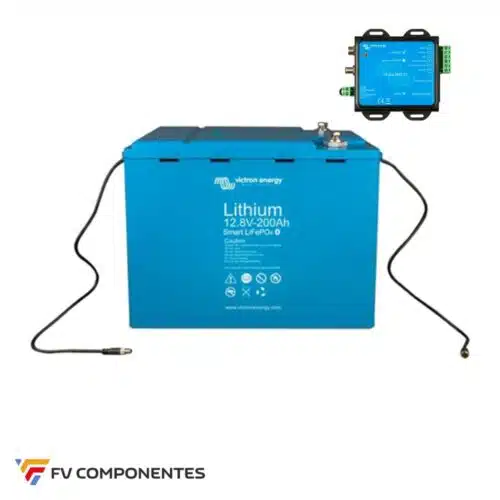
12V LiFePO4 lithium batteries are the standard in campervans, motorhomes, boating and any 12-volt installation where weight and depth of discharge are important. Compared to an equivalent lead-acid battery, they weigh half as much, deliver twice the usable energy and last for between five and ten times as many charge cycles.
Why lithium rather than lead for 12V?
The key factor is the actual usable energy. A 100 Ah lead-acid battery can only be discharged to 50 % without damaging it, so you actually have 50 Ah available. A 100 Ah LiFePO4 battery can be discharged to 90–100 %, so you have between 90 and 100 Ah. For the same range, you need half the battery capacity, half the weight and half the space.
Added to this is charging performance: lithium batteries can handle high currents and charge with 98 % efficiency, whilst lead-acid batteries lose energy as heat and require a long absorption phase. In a van, where you charge whilst driving and time is limited, that difference is noticeable in terms of actual range.
How many ampere-hours do I need?
Add up your daily consumption in watt-hours and divide it by 12. Real-world figures for a campervan: compressor fridge 300–500 Wh/day, LED lights 50 Wh, water pump 30 Wh, laptop and mobiles 150 Wh, auxiliary heating 100 Wh. The total is around 700–900 Wh, which is about 60–75 Ah per day.
With a 12V, 100 Ah lithium battery You’ll get just over a day’s battery life without sunlight or an alternator. With 200 Ah, that’s two full days and a bit to spare for winter. Above 300 Ah, it’s usually worth considering switching to 24V to reduce cable cross-sections.
The BMS: what sets a good battery apart from a cheap one
Every lithium battery requires a battery management system that balances the cells and cuts off power in the event of overcharging, over-discharging or temperatures outside the specified range. Batteries with an integrated BMS, such as the Victron SuperPack and the NG series, already have this built in and can be installed just like a lead-acid battery.
Victron’s Smart batteries go one step further: they communicate with the inverter and the rest of the system, so that the entire installation is aware of the actual state of charge. If you’re using individual cells, you’ll need a External BMS.
A critical point on a vehicle: A lithium battery must not be charged at temperatures below 0 °C. If you’re going to use the van in winter, choose a model with a built-in heater or one with a low-temperature cut-out.
How do you charge a 12V lithium battery?
You cannot connect it directly to the alternator: the alternator’s voltage is not suitable for the lithium battery, and the current drawn by an empty LiFePO₄ battery could damage it. The correct approach is to insert a DC-DC converter or booster, which maintains the correct voltage and protects the alternator.
From a 220V mains supply, with a 12V battery charger with a lithium profile. From solar panels, with a MPPT controller configured for LiFePO4. If you want all three power supplies built-in and pre-assembled, take a look at the solar kits for campervans.
Which 12V lithium battery should I buy?
We distribute Victron Energy —SuperPack, Smart and the NG series with integrated BMS— and Upower, in capacities ranging from 20 to 300 Ah. If you need a higher voltage, you also have 24V lithium battery y 48V lithium battery for housing.
Tell us what your energy consumption is and how you plan to charge, and we’ll tell you what capacity you actually need. The technical advice It’s free and takes place before the sale, not after.