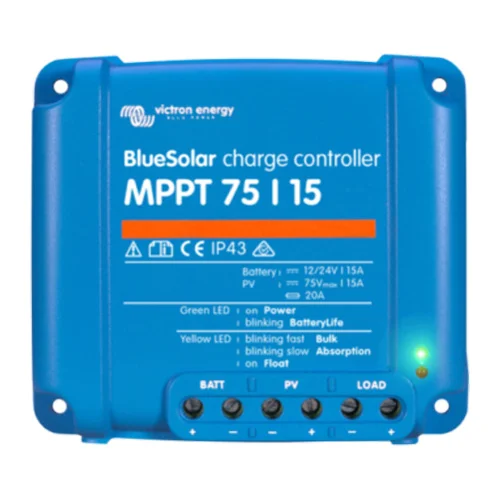
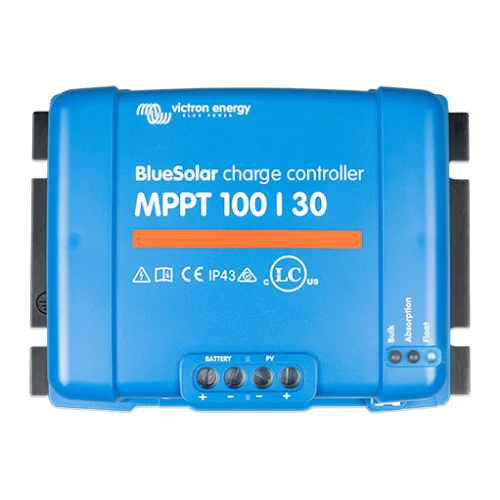
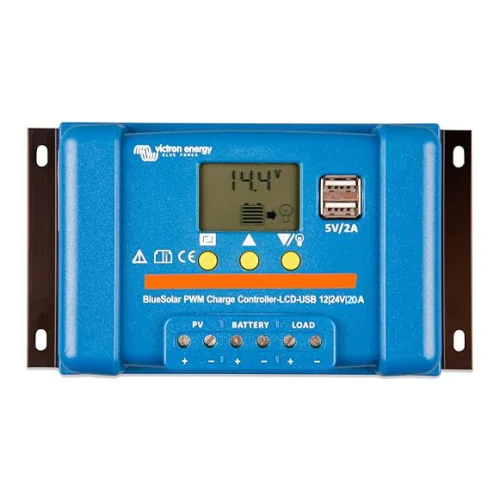
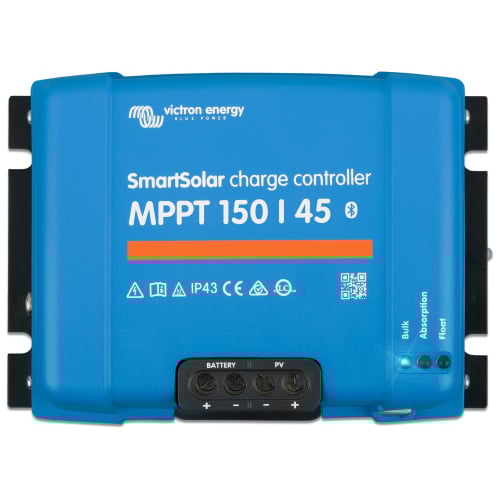
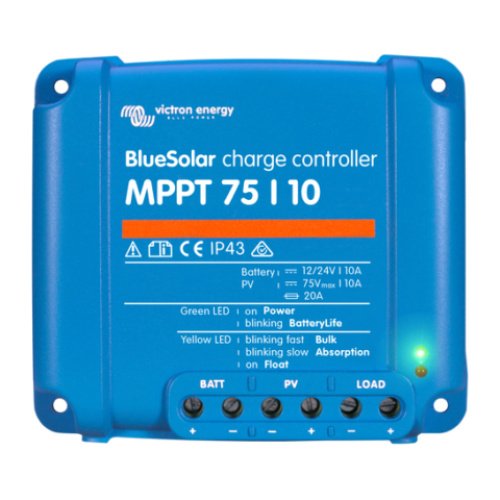
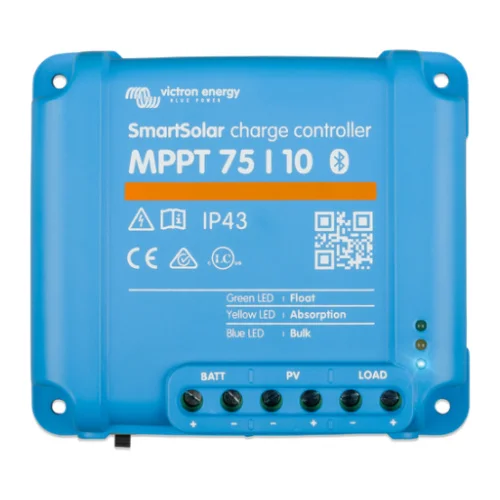
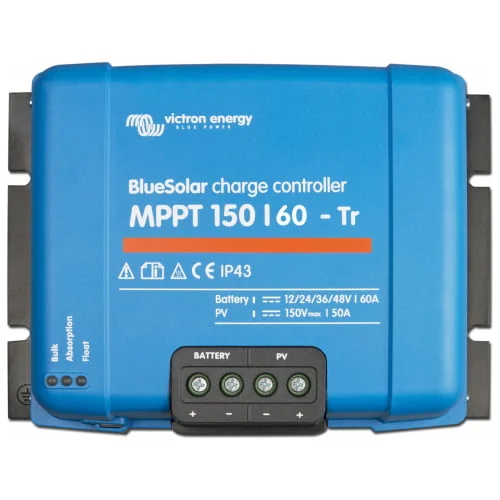
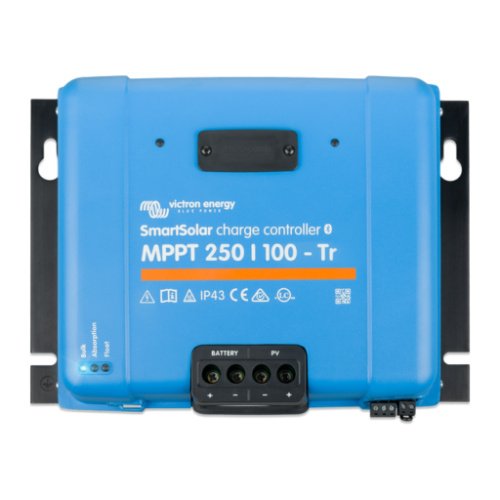
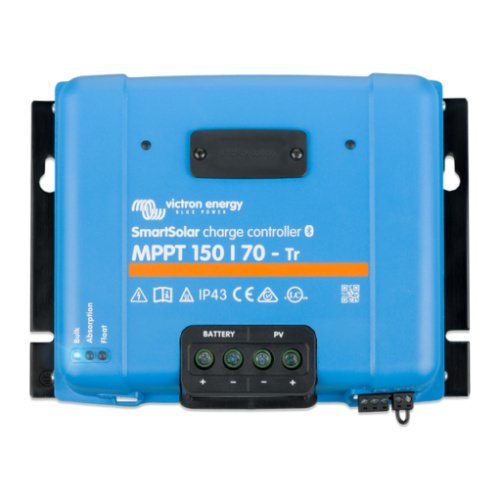
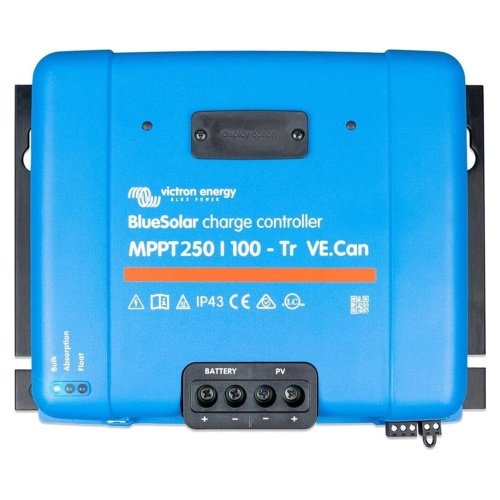
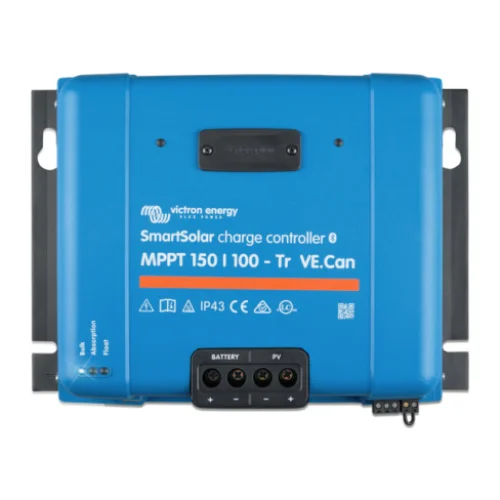
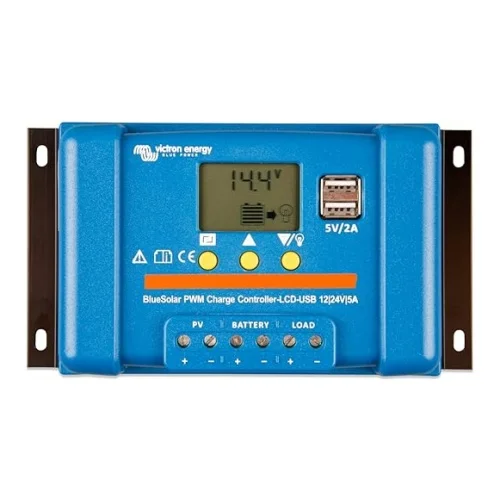
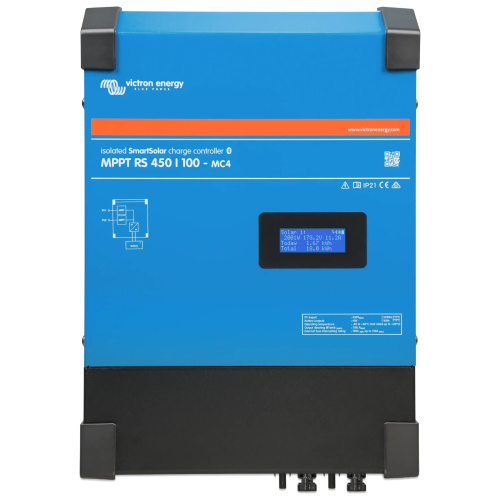
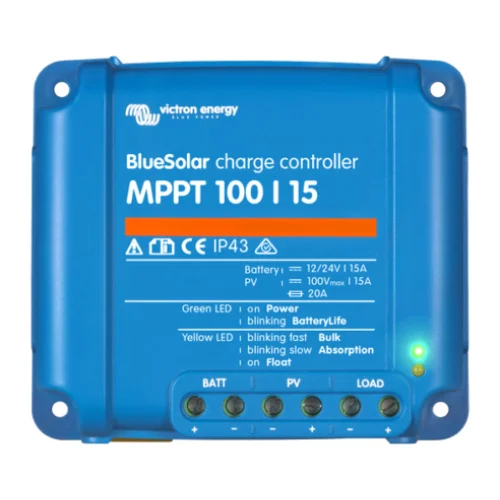
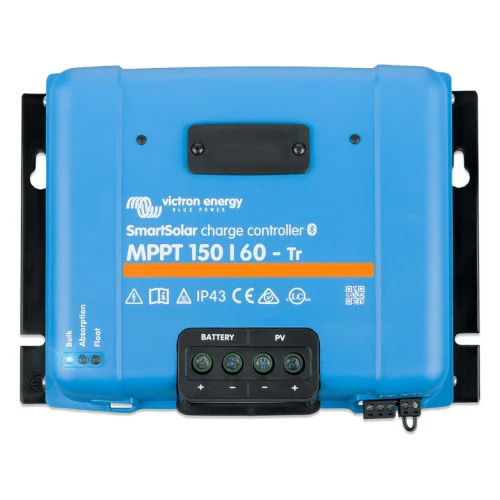
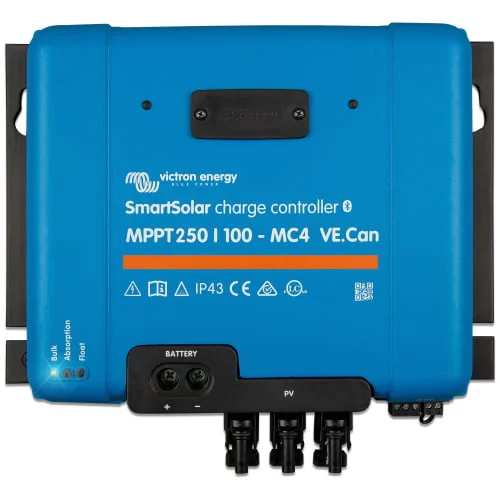
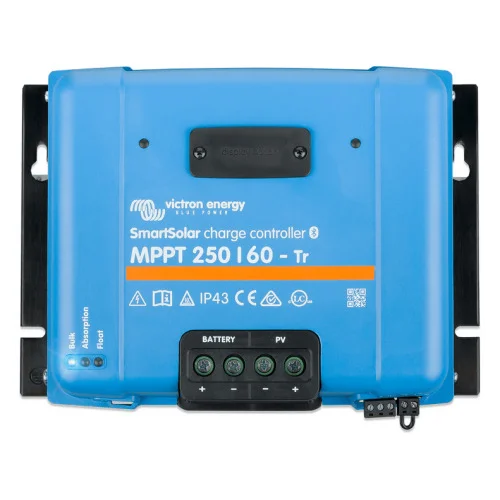
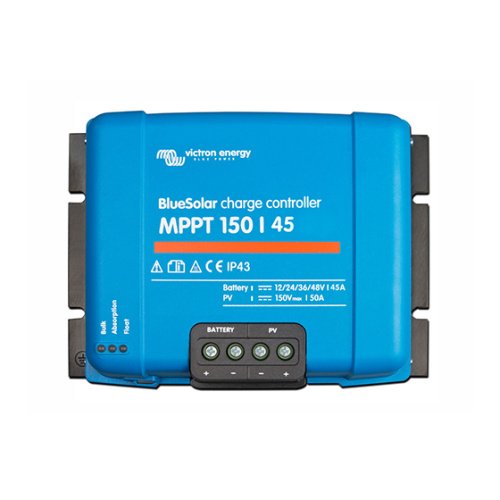
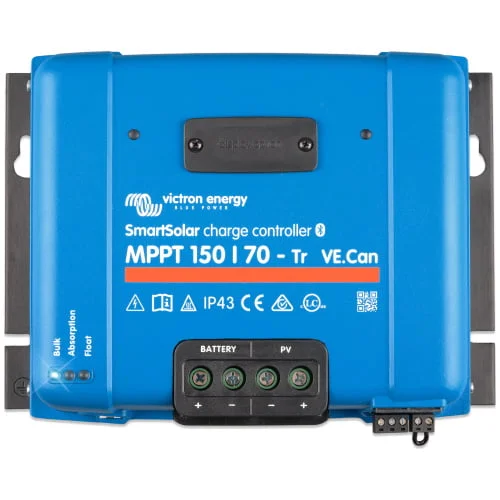
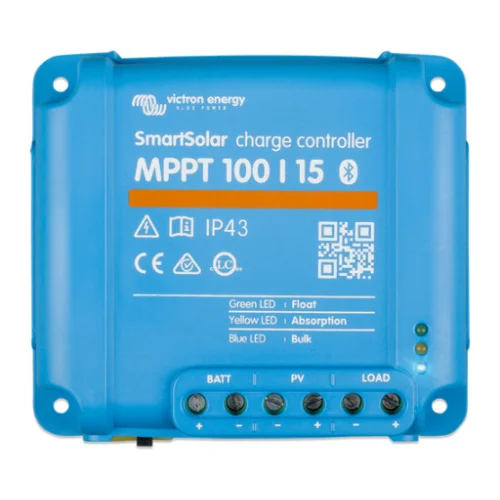
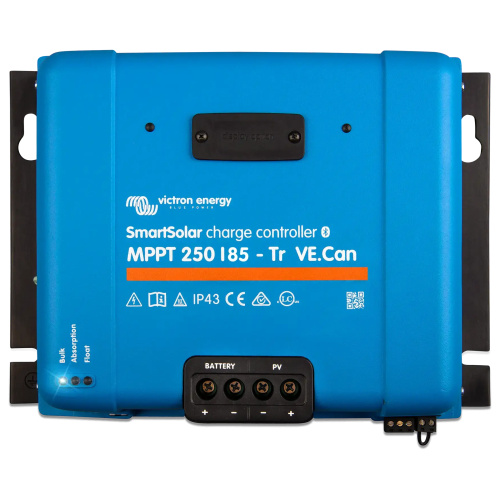
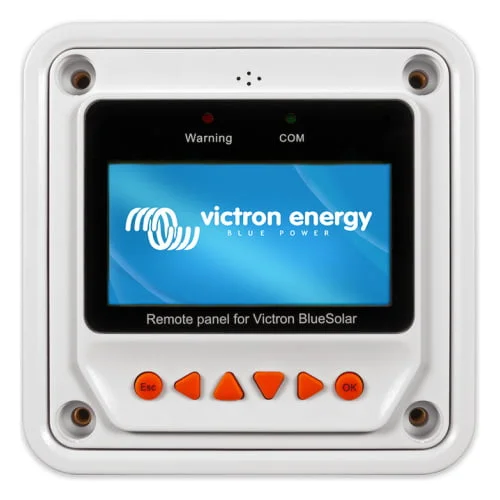
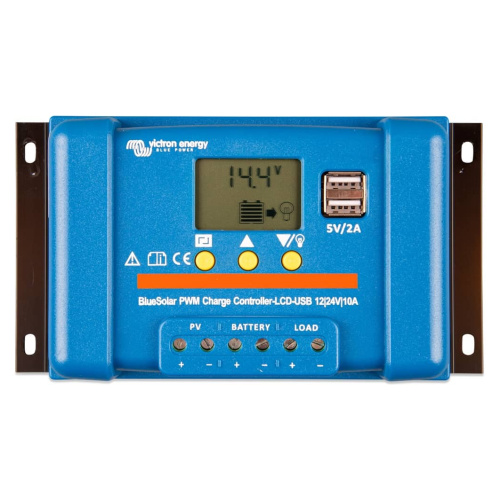
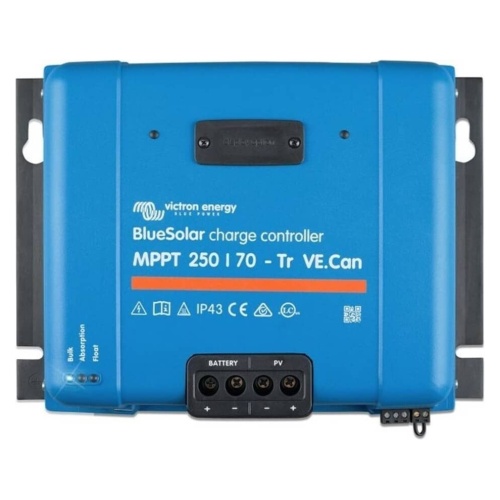
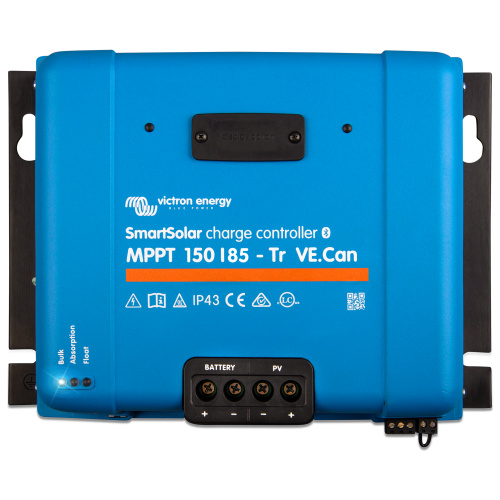
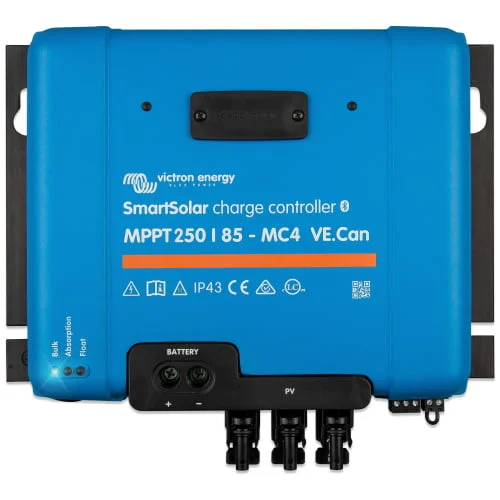
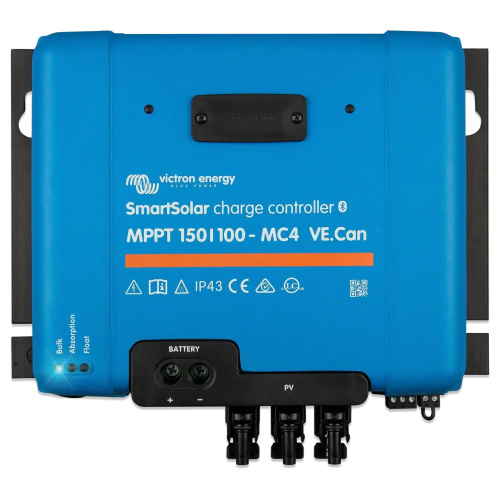
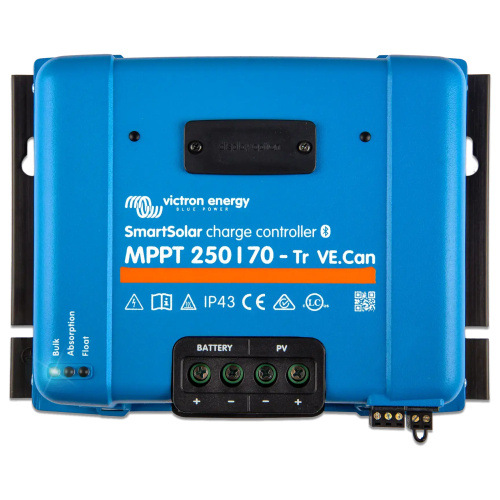
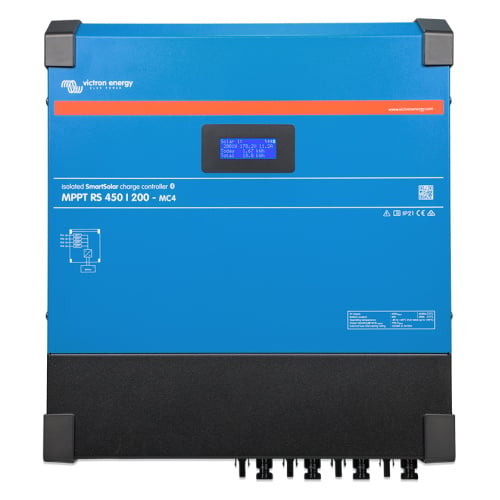
The solar charge controller is the device that is connected between the panels and the battery to control how the battery is charged: it regulates the voltage, cuts off the charge when the battery bank is full, and prevents the battery from discharging back into the panels at night. Without it, a panel connected directly to the battery would destroy the battery within a few weeks.
MPPT or PWM controller
These are the two technologies available, and the difference between them lies in performance, not in function.
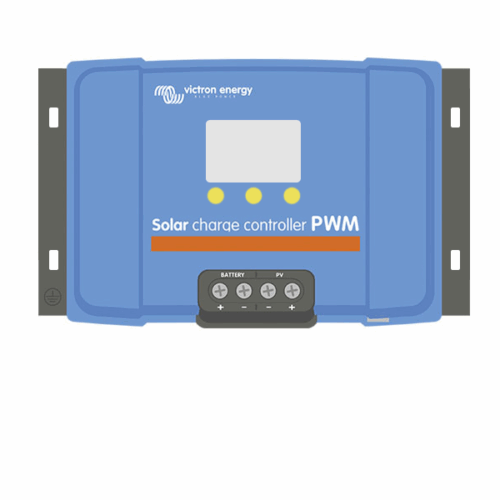
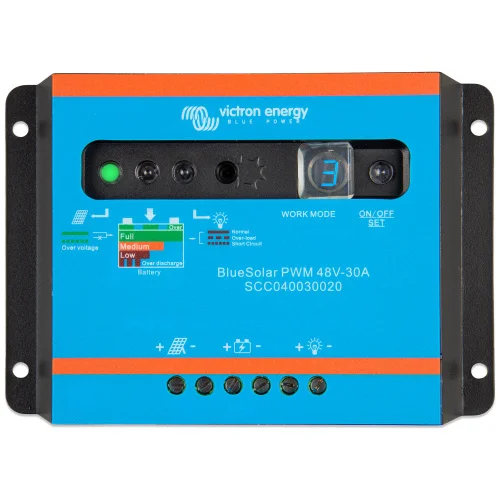
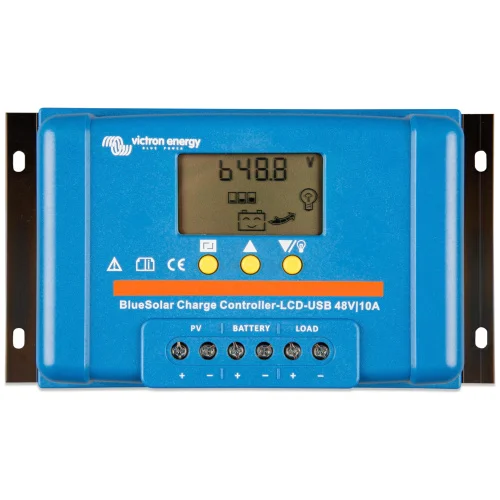
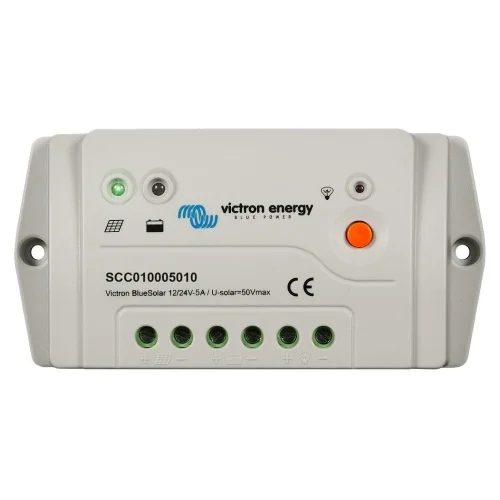
A PWM controller It connects the panel to the battery and forces the panel to operate at the battery’s voltage. Any voltage difference between the panel’s optimum voltage and that of the battery is lost. It is inexpensive and works well when the two voltages are similar: a 36-cell panel with a 12 V battery.
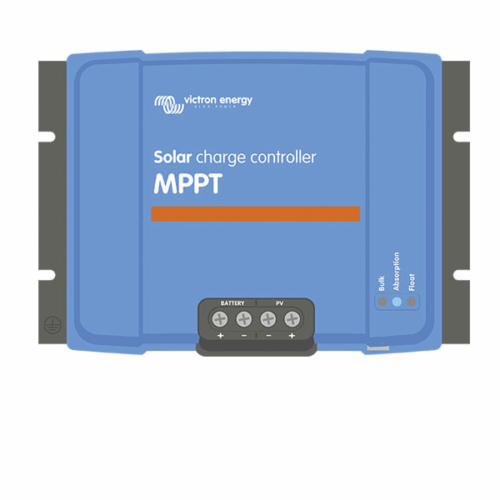
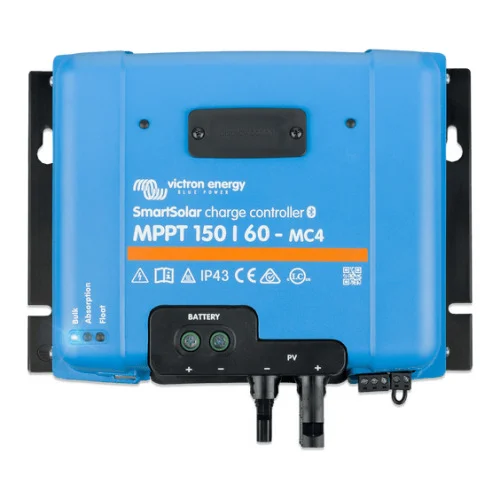
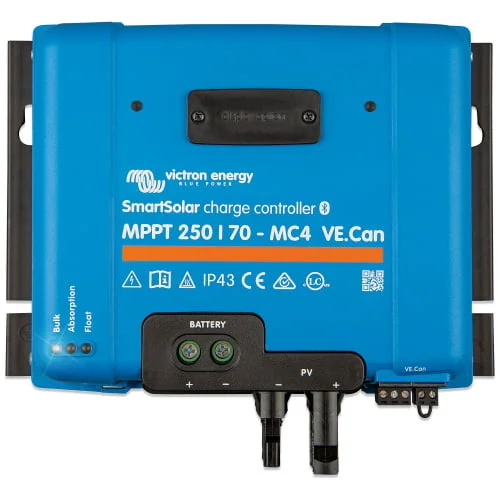
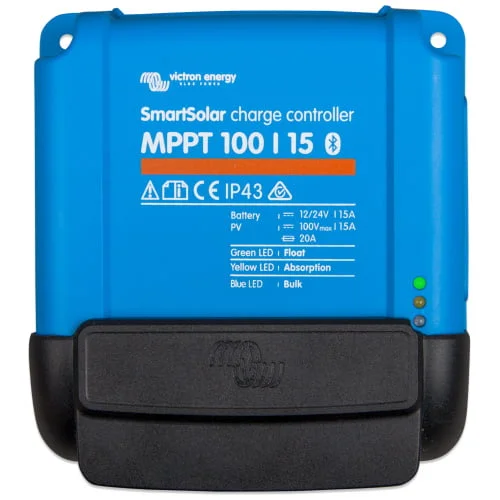
A MPPT controller It tracks the panel’s maximum power point several times per second and converts excess voltage into additional current. Using the same panels, it delivers between 20 and 30 % more energy, and that difference pays for itself.
The rule of thumb: for outputs below 100–150 W and with panels rated at 12 V, PWM is acceptable. In all other cases, MPPT.
Solar charge controller for 12V, 24V and 48V
Modern regulators automatically detect the battery bank voltage, so the same model can be used for 12, 24 or 48 volts. What changes with the voltage is the current: the same 600 W panel draws 50 A from a 12 V battery and only 25 A from a 24 V battery, so the higher the system voltage, the smaller the regulator you need for the same installed power.
How to work out the correct size
Two numbers. The maximum input voltage, which must exceed the open-circuit voltage of your string on the coldest day of the year — the cold causes it to rise —. And the output current, which is calculated by dividing the total power of the panels by the battery voltage.
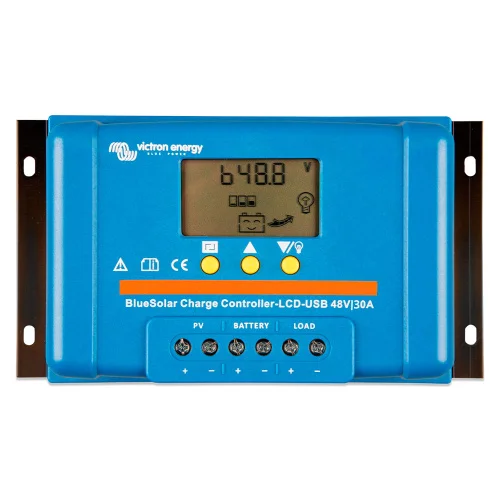
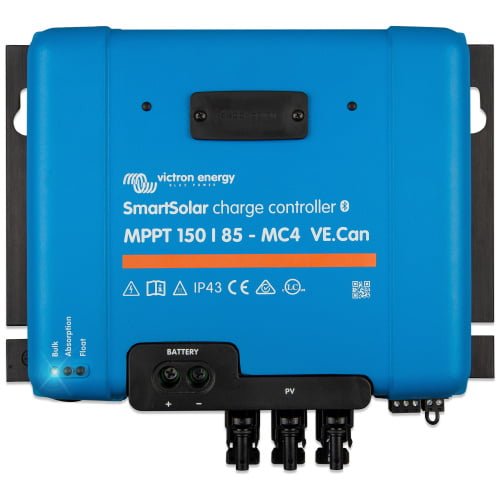
A regulator is rated by these two values: a 100/30 model accepts a 100 V input and delivers 30 A.
Set it up for your battery
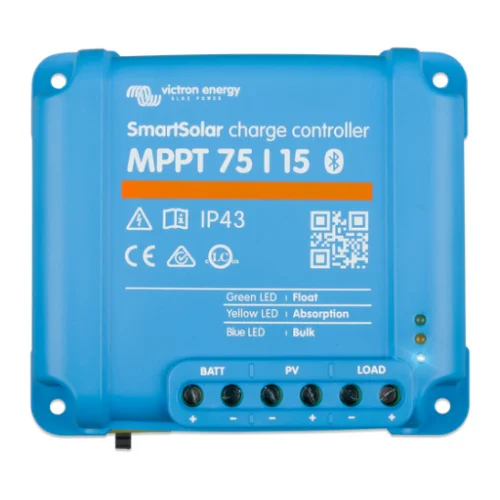
The load stresses in a lithium battery are not those of a AGM nor those of a gel battery. Leaving the default profile is one of the most common mistakes, and it comes at the expense of the battery’s lifespan. The Victron SmartSolar allow you to adjust it from your mobile via Bluetooth in a minute.
Tell us what panels you have and what voltage your battery operates at, and we’ll tell you the exact model: technical advice Free of charge and delivered within 24–48 hours.