ZYC SIMPO 5000 versus Pylontech US5000: what really changes in your installation
Author: David Conesa Albaladejo
Publication date: 8 September 2026
Last updated: 8 September 2026
Pylontech has been the standard 48 V battery in Spain for years. It is found in half of the country’s self-consumption installations with storage; all inverters come with it pre-configured, and the installer who fits it knows exactly what to expect. That is a real achievement and it is worth pointing out before making any comparisons.
The question we’re asked every week is a different one: When a new brand is added to the catalogue, what does the installer stand to gain or lose? We have incorporated the ZYC SIMPO 5000, so let’s put it next to the US5000 and look at the fact sheet, not the brochure.
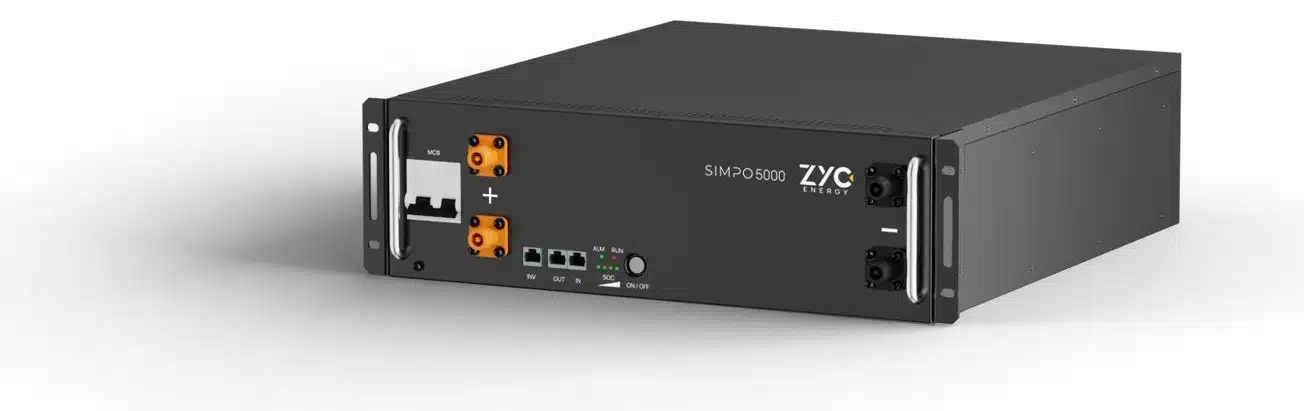
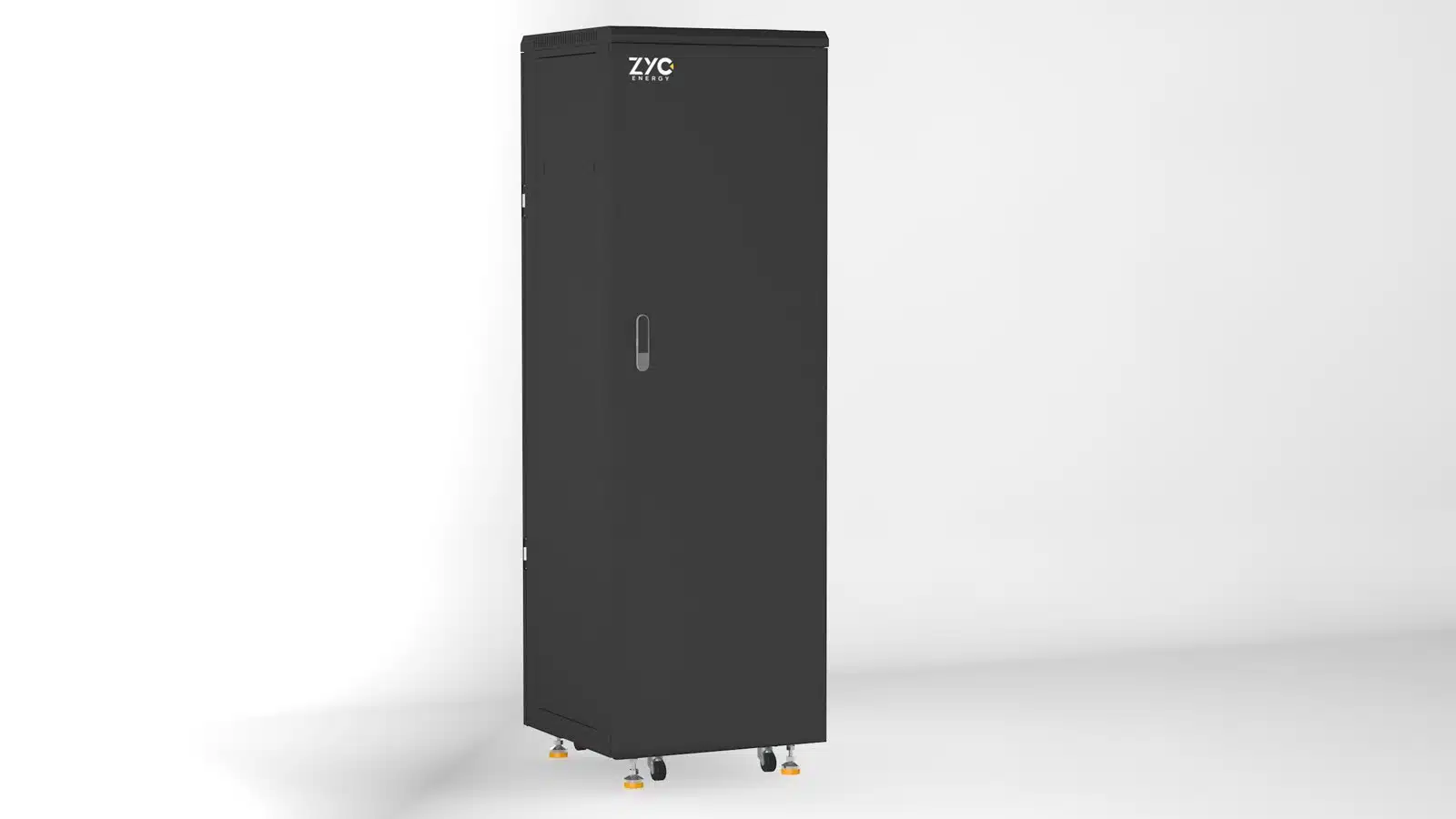
ZYC SIMPO 5000 module: 5.12 kWh usable capacity in a 19-inch rack-mount format.
The table, first of all
ZYC SIMPO 5000
Pylontech US5000
Chemistry
LiFePO4
LiFePO4
Nominal energy
5,12 kWh
4.8 kWh
Useful energy
5.12 kWh (DoD 100 %)
~4.56 kWh (DoD 95 %)
Rated voltage
51,2 V
48 V
Voltage range
40.8 – 58.08 V
45–54 V
Direct current (charging and discharging)
100 A
75 A nominal / 120 A (15 min)
Peak current
200 A (5 s)
200 A (15 s)
Charging temperature
-10 °C to +55 °C
0 °C to +50 °C
Discharge temperature
-20 °C to +55 °C
-10 °C to +50 °C
Integrated protection
1P 125 A / 80 V DC switch on the module
External circuit breaker
Max. in parallel
80 modules (64 of which have several cupboards)
16 modules
Communication
CAN 2.0A / RS485 / no communication
CAN / RS485 / RS232
Format
19″ rack · 482 × 134 × 518 mm
19″ rack · 442 × 420 × 161 mm
Weight
44 kg
38 kg
Cell certification
UL1973, UL9540A, IEC 62619:2022, UN38.3
IEC 62619, UN38.3
Guarantee
10 years
10 years
The four differences that really stand out
1. Load at -10 °C: the only one that changes the design
That is the fundamental difference. The US5000, like almost all LFPs of its generation, stops charging at temperatures below 0 °C: the BMS cuts off the power to protect the cells, and the system simply stands by whilst the sun generates power, unable to store it. The SIMPO 5000 can be charged down to -10 °C and discharged down to -20 °C.
Below 0 °C, the US5000 stops accepting a charge; the SIMPO 5000 continues to charge down to -10 °C.Low-temperature chemistry is what makes it possible to continue charging in winter.
In a garage in Cartagena, it doesn’t matter. In a mountain refuge in the Pyrenees, an unheated warehouse in Teruel, a pumping station on the plateau or an isolated facility in Soria, it’s the difference between having battery power in January or not. If your facility is in a heated indoor space, This feature doesn’t offer you any benefit, and you shouldn’t have to pay for it. If he’s out, there’s no debate.
2. Useful energy: 5.12 versus 4.56 kWh
The SIMPO specifies 5.12 kWh of usable capacity at a depth of discharge (DoD) of 100 %. The US5000 specifies a nominal capacity of 4.8 kWh at a DoD of 95 %, which equates to approximately 4.56 kWh in practice. These are 560 Wh per module, another 12 %.
In practical terms: a 6-module array increases from around 27.4 kWh to 30.7 kWh. In many cases, that is exactly the number of modules you save on, including their cabling, the space they take up and the margin.
3. Direct current: 100 A compared with 75 A
SIMPO presents 100 continuous amps both during charging and discharging; the US5000, rated at 75 A with a margin of 120 A for 15 minutes. With a MultiPlus-II 48/5000 or a Quattro operating at sustained load, you need fewer SIMPO modules to cover the same power output. You can find the details by inverter model at How many ZYC SIMPO 5000 batteries do I need, depending on my inverter?.
4. Scalability: 80 modules compared with 16
The difference here is one of category, not of degree. The US5000 supports up to 16 modules in parallel, providing around 73 kWh: more than enough for any home and just about sufficient for small-scale industry. The SIMPO supports up to 80 modules in parallel without external management devices, and 64 when several cabinets are combined. For residential use, this is irrelevant; for an industrial unit, an energy community or an agricultural project involving pumping, it means scaling up in phases without changing the architecture.
A feature that installers appreciate: the switch is fitted inside
Each SIMPO module has its own 1-pole switch, 125 A and 80 V DC built into the front panel. It acts as the battery’s ON/OFF switch and protects it against overcurrent, short circuits, overvoltage and over-discharge. In practice, this means you don’t need an external circuit breaker for each module, and the cabinet looks tidier. They are also hot-swappable: a unit is replaced without shutting down the system.
Where Pylontech continues to excel
It would be dishonest not to say so.
Ecosystem and compatibility. The US5000 has been pre-configured for years on Victron, Deye, SMA, Solis, Growatt and virtually any hybrid inverter on the market. It is the benchmark against which firmware is tested.
Proven track record. Thousands of installations across Spain, backed by years of practical experience. Nobody’s going to ask you where that brand comes from.
Second-hand goods and spare parts. There’s a market, there’s stock and there’s service.
Lighter weight and smaller size. 38 kg compared with 44, and a significantly shallower cabinet: the SIMPO requires a rack with a depth of 600 mm.
Admission price. In small battery banks, where you don’t benefit from either current or scalability, Pylontech usually works out better per kWh installed.
SIMPO is certified to UL1973, UL9540A, IEC 62619:2022 and UN38.3 cell standards, and has verified compatibility with Victron, Studer, SMA, Deye, Goodwe, Solis, Selectronic, Steca and Noark. However, it is a brand with less of a track record in the Spanish market, and that weighs heavily in the decision.
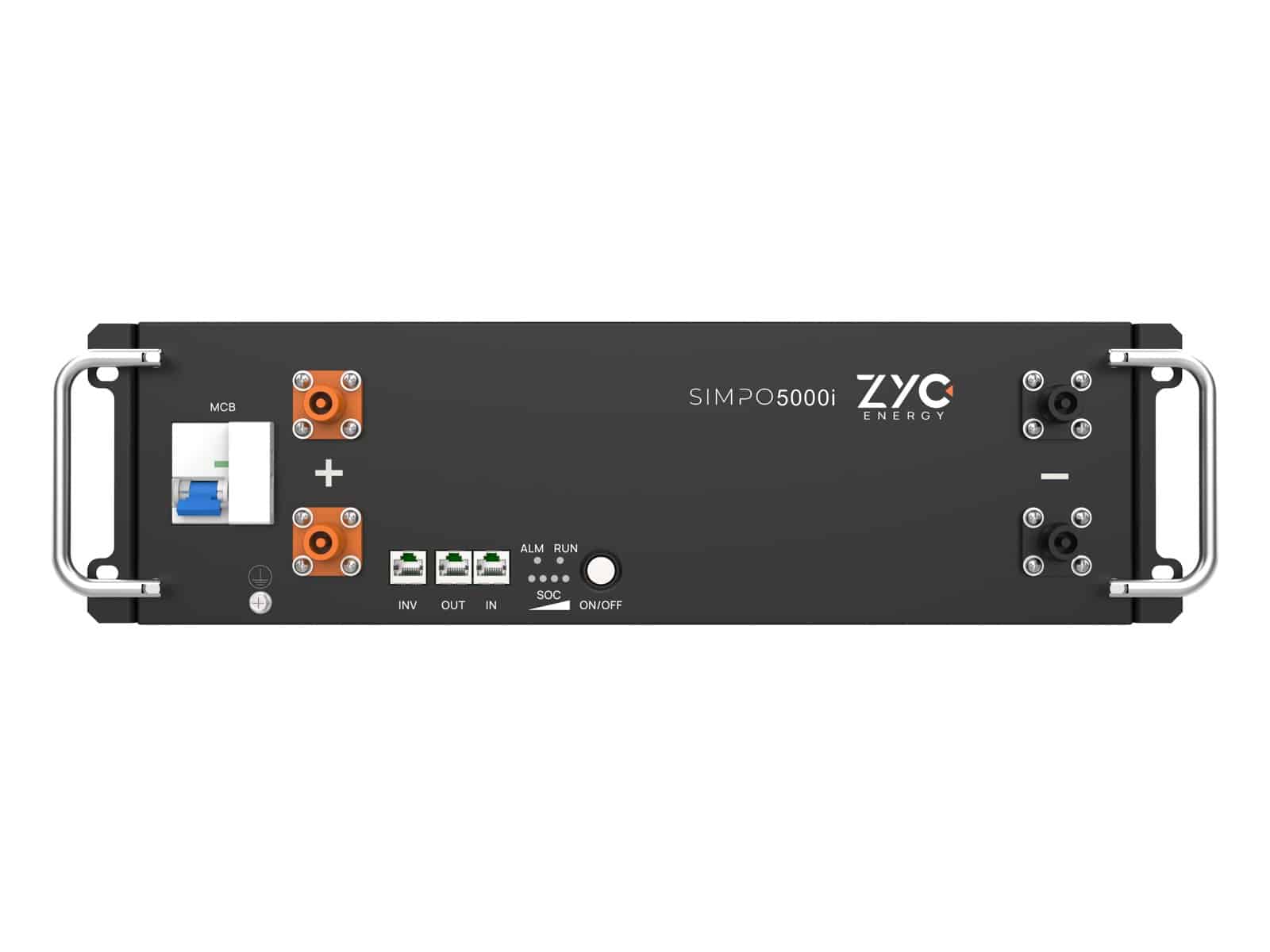
The SIMPO 5000i has the same design and capacity, but with more limited temperature and current capabilities.
What about the SIMPO 5000i?
In the catalogue you will also find the SIMPO 5000i. It is important to understand the difference properly, because the name is misleading: It is not a higher version. It shares the same format, capacity and built-in switch, but load from 0 °C instead of -10 °C, it accepts 70 A load current instead of 100 A, and its warranty is defined as 10 years at 60 % of capacity, compared with the SIMPO 5000’s 80 %.
To put it simply: if the battery is going to be kept in a cold place or if you’re going to be putting a heavy load on it, the SIMPO 5000. The 5000i is the entry-level option for installations in temperate indoor environments and with moderate energy consumption.
Our recommendation
Choose the Pylontech US5000 if The installation is indoors; you’re already working with it and have the process sorted; the garage is small; or the customer insists on a brand with a long track record in Spain. It’s a reliable battery and there’s no reason not to fit it.
Choose the ZYC SIMPO 5000 if The battery will be located in a cold environment; you want more usable energy per module; the project may exceed 70 kWh; or you need more direct current per module without stacking additional units.
As always: the right battery is the one that suits your inverter, your energy consumption and the place where it’s going to be for the next fifteen years. If you tell us about your project, we’ll tell you which of the two makes the most sense – including the option of sticking with the one you already have.
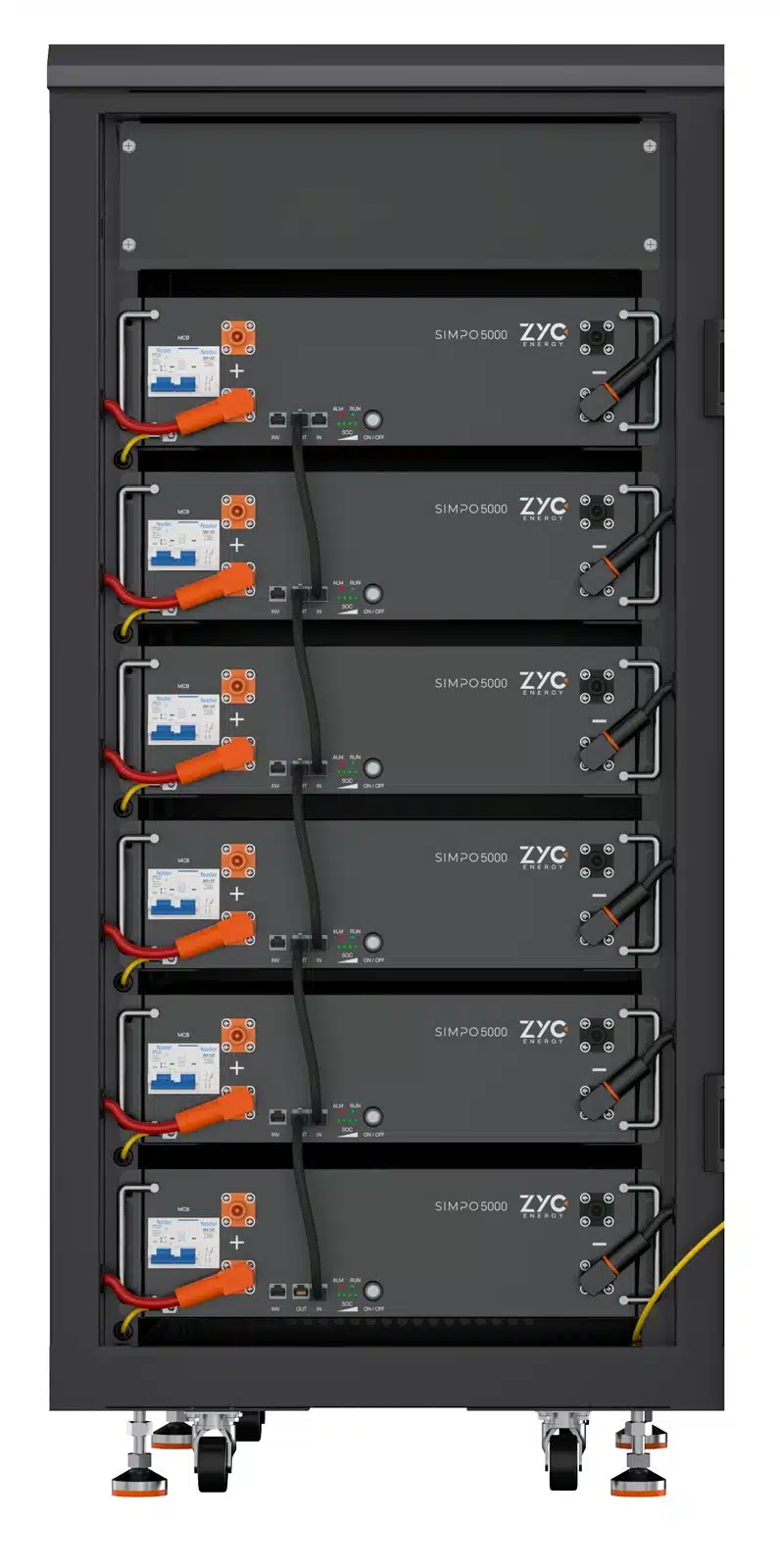
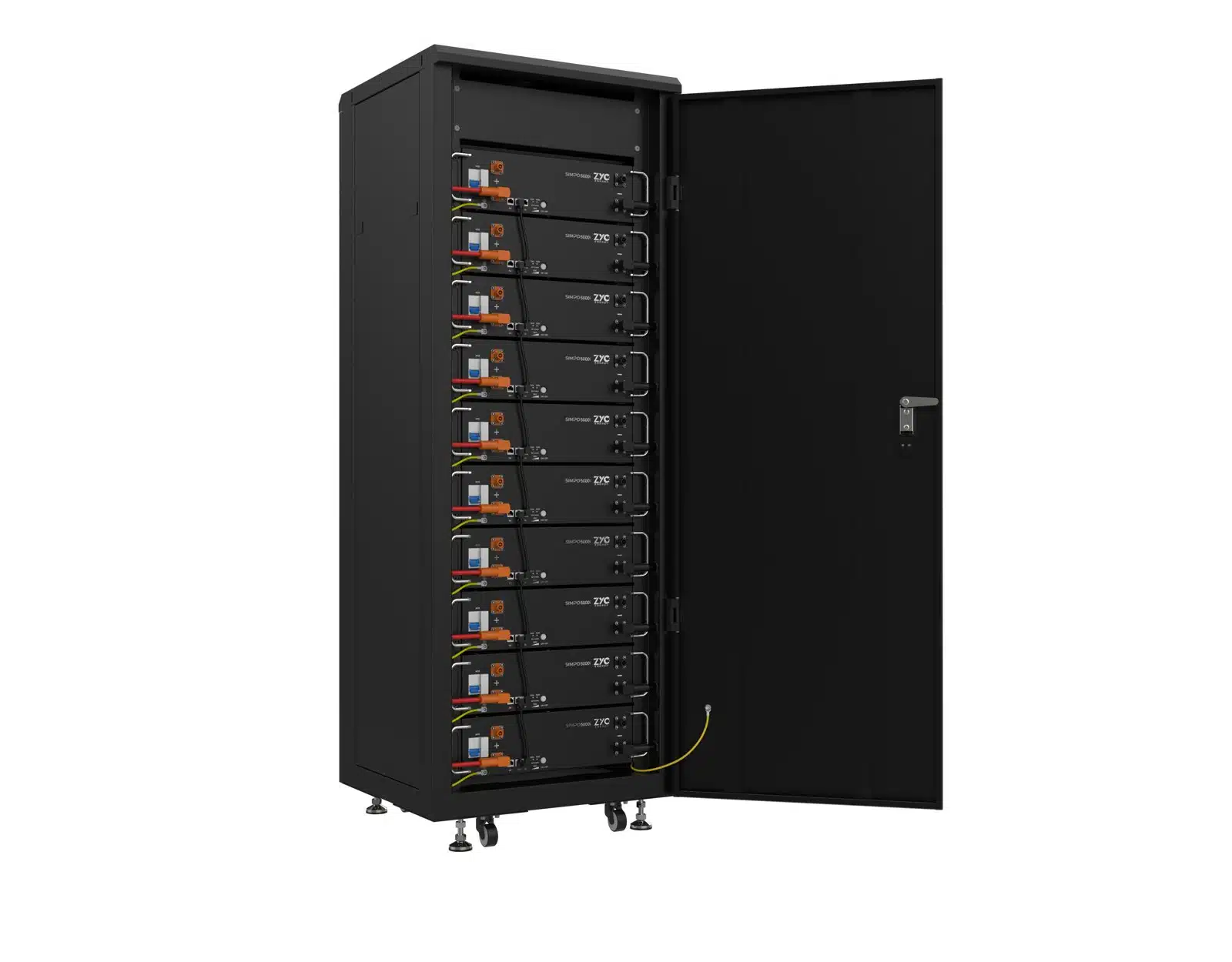
Installation guide for a ZYC SIMPO 5000 bench: location, 6- and 10-unit cabinets, cable cross-sections and tightening torques, multiple cabinets in parallel, start-up, LEDs and maintenance.
A practical guide to connecting ZYC SIMPO 5000 batteries to a Victron inverter: VE.Can cable, CAN pins, start-up sequence, communication-free mode and official charging voltages.
Table showing the minimum battery configuration for the ZYC SIMPO 5000 by inverter model: Victron, Deye, SMA, Studer, Goodwe and Solis, for both grid-connected and off-grid installations.
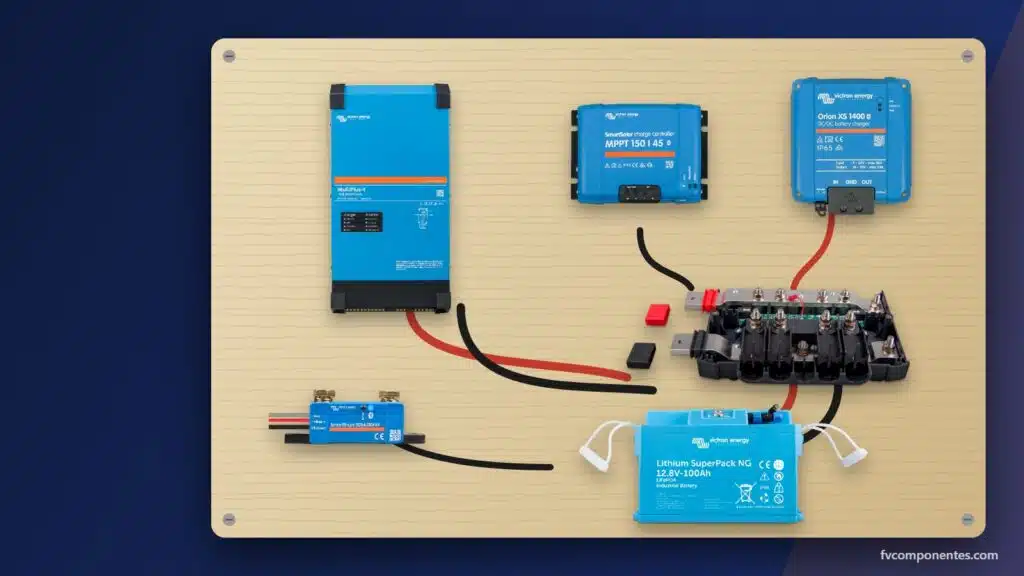
Victron campervan electrical system pre-fitted to a panel: inverter, lithium battery, Orion XS booster, charger and MPPT – all wired, protected and configured. Schematic diagram, sizing, 220 V, type approval and indicative prices.
We use our own and third-party cookies to obtain statistical data on our users' browsing habits, offer personalised marketing and improve our services.
Functional
Always active
The storage or technical access is strictly necessary for the legitimate purpose of enabling the use of a specific service explicitly requested by the subscriber or user, or for the sole purpose of carrying out the transmission of a communication over an electronic communications network.
Preferences
The technical storage or access is necessary for the legitimate purpose of storing unsolicited preferences of the subscriber or user.
Statistics
Technical storage or access that is used exclusively for statistical purposes.Technical storage or access that is used exclusively for anonymous statistical purposes. Without a request, voluntary compliance by your Internet Service Provider, or additional records from a third party, information stored or retrieved solely for this purpose cannot be used to identify you.
Marketing
Technical storage or access is necessary to create user profiles to send advertising, or to track the user across a website or across multiple websites for similar marketing purposes.