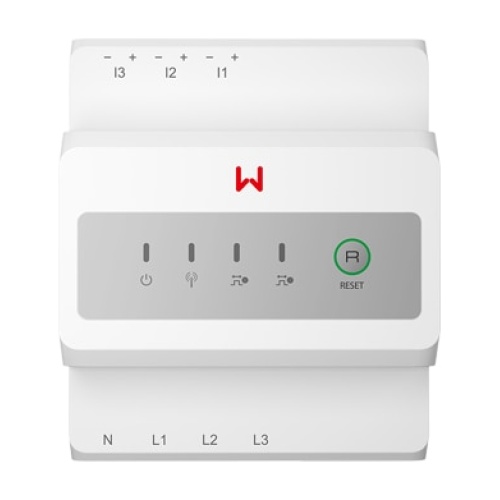
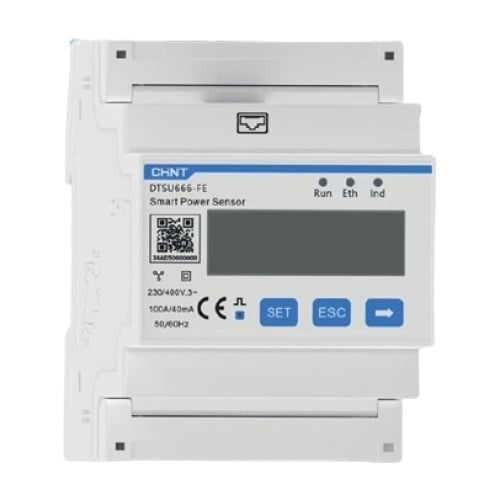
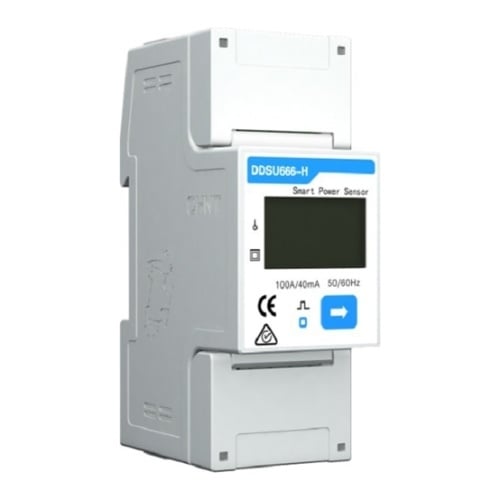
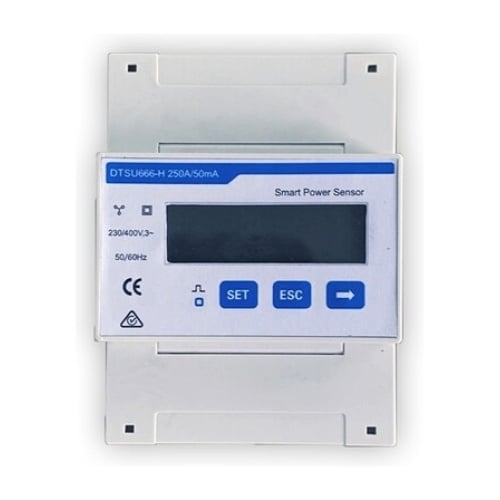
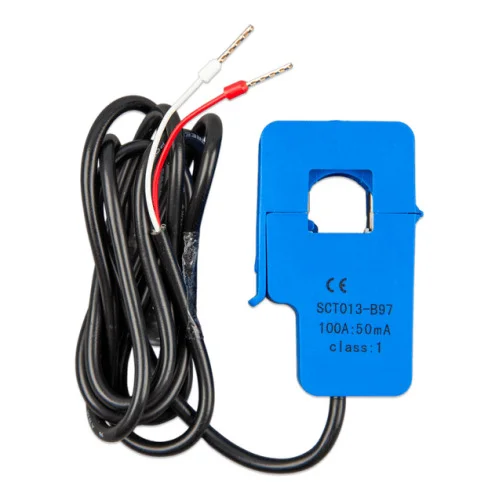
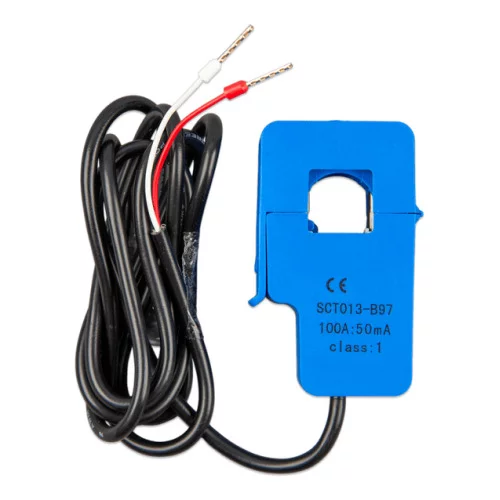
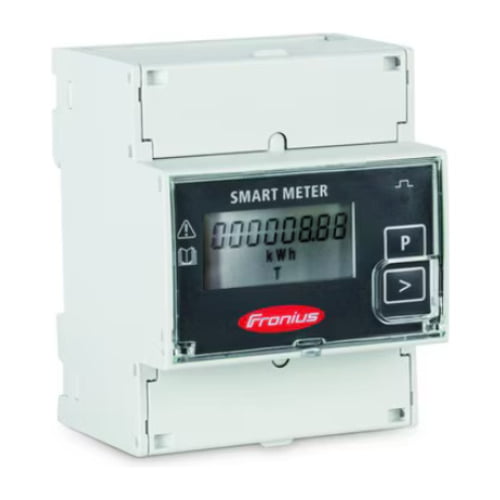
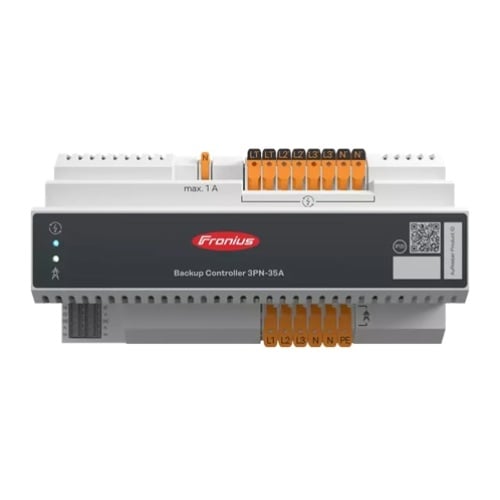
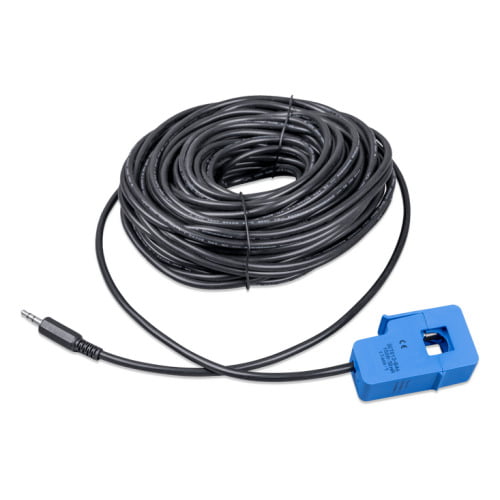
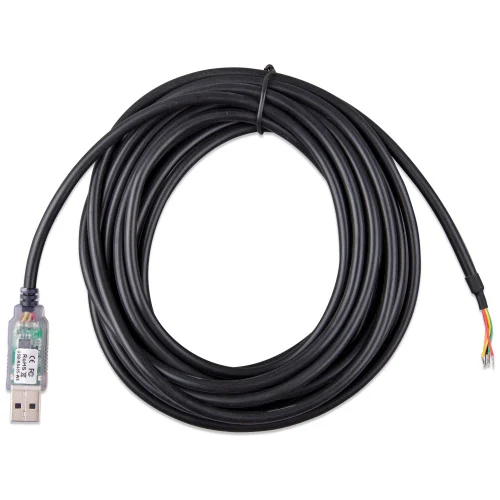
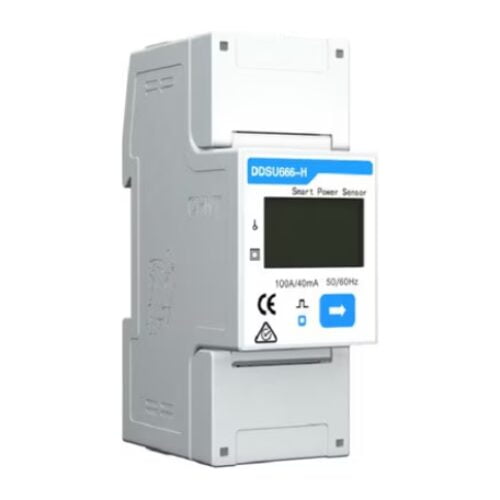
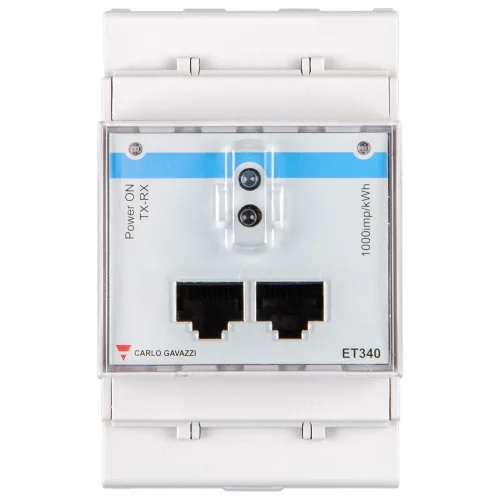
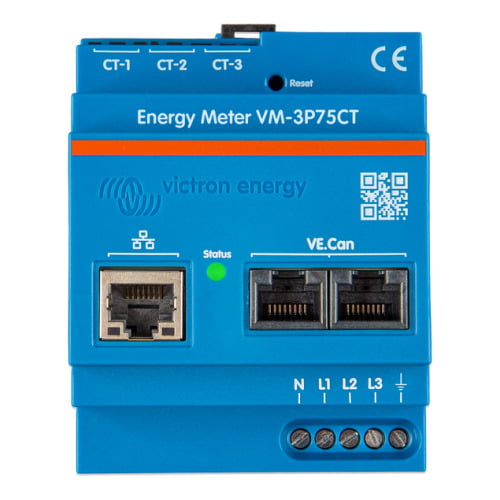
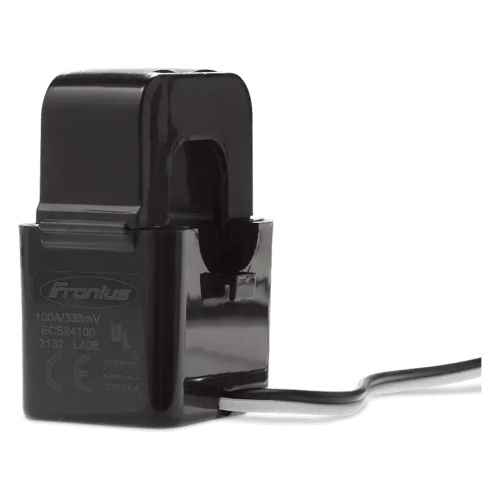
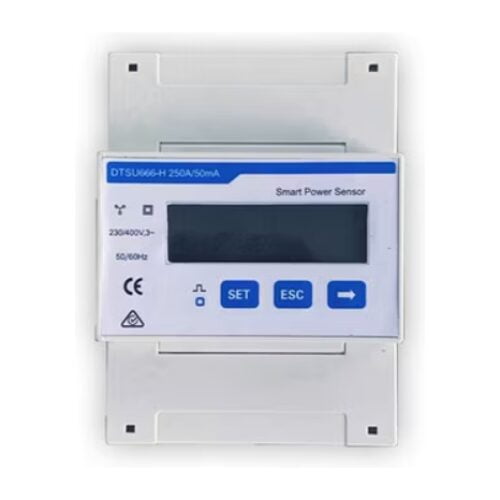
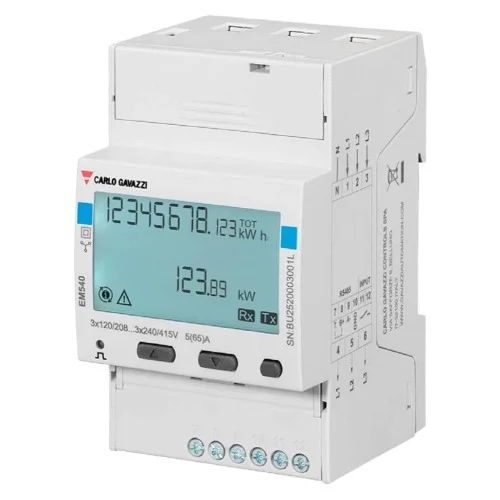
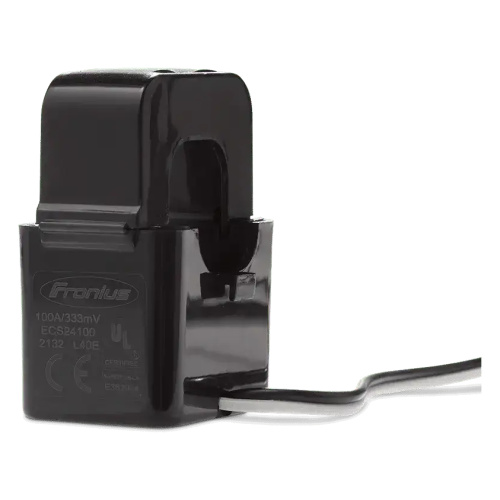
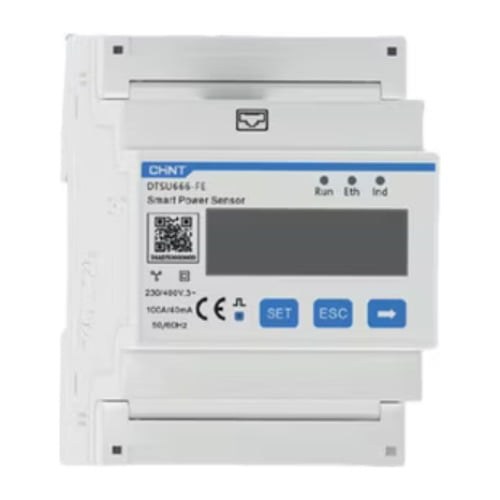
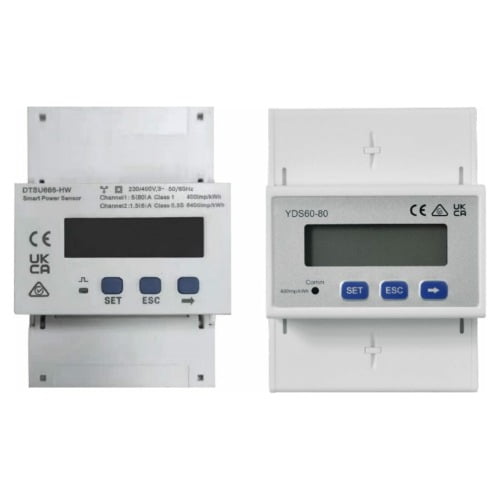
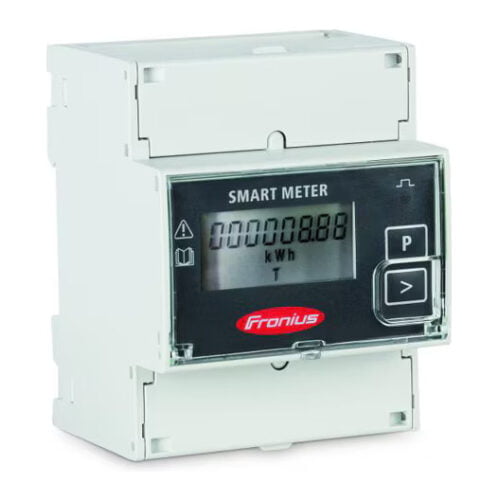
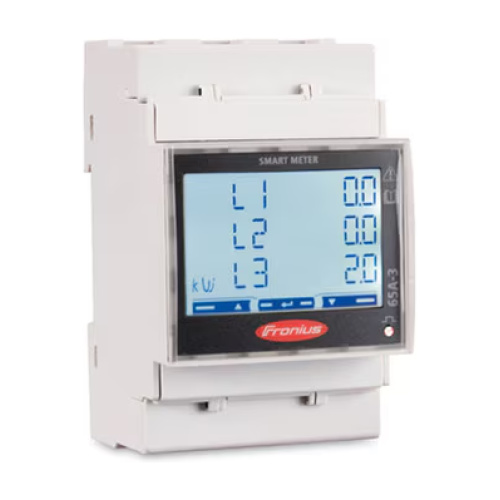
The energy meter — or smart meter— is the device that measures the flow of energy at the point of connection to the grid. Without it, an inverter only knows how much the panels are producing: it does not know how much the property is consuming or how much is being fed into the grid. It is the component that enables zero net metering and the effective management of surplus energy.
Is it compulsory to install an energy meter?
Technically, it is, as long as you want it to be to limit or stop the feed-in to the grid, which is the case for most installations without surplus energy offsetting or with imposed limits. This is also the case if you want the system to prioritise charging the batteries with the surplus energy rather than feeding it back into the grid.
If the system feeds into the grid freely and there is no battery, you can do without it, but you’ll lose all the data on consumption and self-consumption.
Which meter do I need for my inverter?
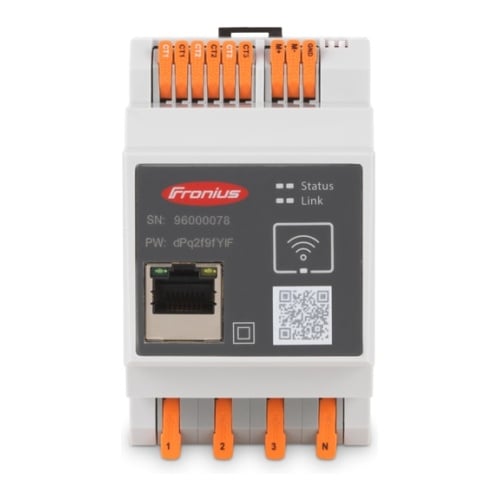
- Fronius: TS Smart Meter, available in single-phase or three-phase versions, connected to the inverter via Modbus RTU. The TS 65A-3 is suitable for three-phase installations of up to 65 A per phase; current transformers are used for higher currents.
- Huawei: Smart Power Sensor: the SmartPS-100A-S0 for single-phase and the SmartPS-250A-T0 for three-phase systems up to 250 A.
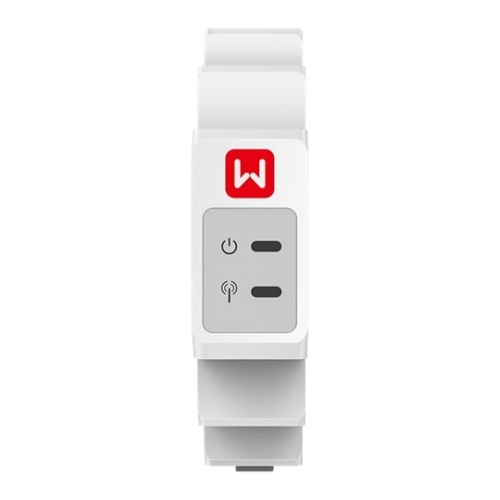
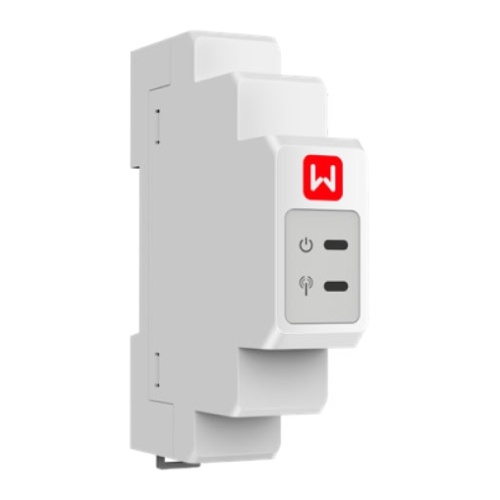
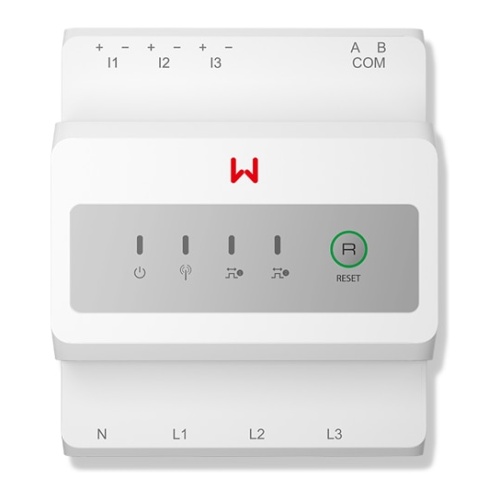
- GoodWe: GMK110 for single-phase and GM330 or GMK330 for three-phase.
The meters they are not interchangeable between brands: Each manufacturer uses its own protocol and register map.
Where is the meter installed?
In the main distribution board, upstream of all loads and the inverter connection, so that it can monitor the entire exchange with the grid. If it is installed downstream of a tap-off, that portion of consumption remains hidden and the feed-in control fails.
In installations where the meter is some distance from the inverter, a communication cable must be provided, or metering equipment with current transformers and wireless communication must be used. See also the battery monitors, which measure the DC side.