
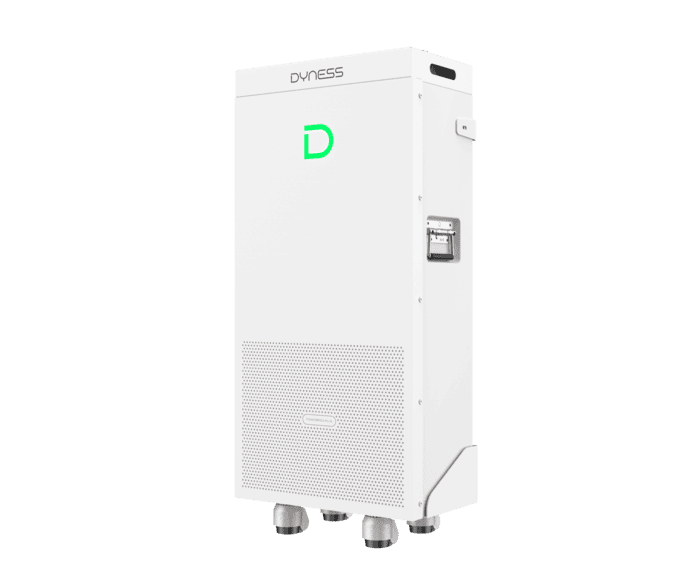
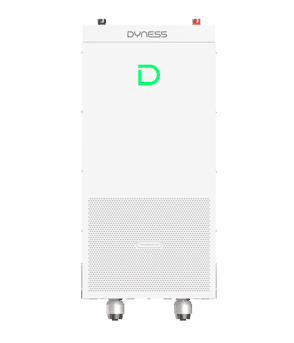
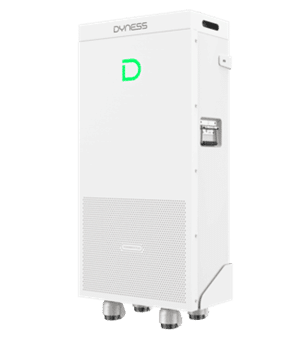
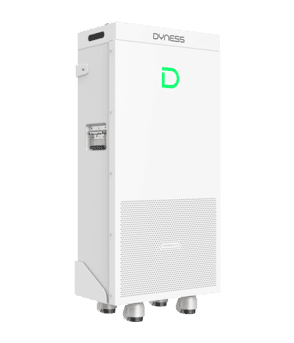
Dyness PowerBrick Plus 16 kWh 48V LiFePO4 IP65 battery
TAXES INC.
- 16.07 kWh in a single module · 51.2 V / 314 Ah
- 200 A charging and discharging (10.24 kW)
- IP65 indoor and outdoor · built-in wheels
- Automatic fire extinguishing
- Up to 50 in parallel (803 kWh)
- Compatible with Victron · 10-year warranty
Disponible para la venta · Plazo de entrega según stock de la referencia

Finance your purchase with Cetelem
Reference:
DYN-PBRKPLUS
Categories: 48V Lithium Batteries, Solar batteries
Details of the Dyness PowerBrick Plus 16 kWh 48V LiFePO4 IP65 battery
The Dyness PowerBrick Plus is a 48 V (51.2 V nominal) LiFePO4 lithium battery with a capacity of 16.07 kWh in a single unit, with large-format 314 Ah cells, IP65 protection for indoor and outdoor use, integrated wheels and a 200 A charge and discharge rate (10.24 kW). It can be extended up to 50 units in parallel (803 kWh) and is officially compatible with Victron Energy, SMA, Ingeteam, Deye, GoodWe, Solis and Growatt.
Quick summary
- Energy: 16.07 kWh nominal · ≈15.27 kWh usable (95 % DoD)
- Tension: 51.2 V nominal (range 44.8–57.6 V) · 314 Ah
- Current: 200 A charging and discharging (0.64C) · 10.24 kW
- Protection: IP65, indoor and outdoor
- Security: automatic fire suppression within 5 seconds
- Lifetime: ≥8,000 cycles · 10-year warranty
- Assembly: floor or wall-mounted, with wheels so that one person can move it
What is the Dyness PowerBrick Plus used for?
This is Dyness’s solution for those who need a lot of power at low voltage without having to install a solar array: 16 kWh in a single unit measuring 435 × 235 × 850 mm. It is designed for:
- Homes with high energy consumption (air-source heat pumps, electric cars, swimming pools) which they want to power throughout the night using a battery.
- Off-grid installations with several days’ battery life, alongside the Victron, Quattro or MultiPlus-II in three-phase operation.
- Small businesses and industrial units which require support and sustained power.
A single PowerBrick Plus is equivalent to just over three 5 kWh modules, with less cabling, fewer connections and a single communication link to the inverter.
Main features
314 Ah LFP cells
It uses state-of-the-art, high-capacity cells, which pack 16 kWh into a single module and reduce the number of components required to deliver the same amount of energy.
200 A for charging and discharging
It supports 200 A continuous current in both directions (10.24 kW), which is sufficient to power several large loads at once and to fast-charge using a large surplus of solar power.
IP65 and built-in wheels
It can be installed outdoors and, thanks to its wheels, a single person can move it into position despite its weight of 119 kg. It can be mounted on the floor or on a wall.
Automatic shut-off and optional self-heating
The intelligent fire-extinguishing system detects and extinguishes a fire within 5 seconds. The optional heating function extends the operating range to -20 °C – 55 °C; without it, it charges from 0 °C.
Dyness PowerBrick Plus Technical Specifications
| Model | Dyness PowerBrick Plus |
|---|---|
| Chemistry | LiFePO4 (lithium iron phosphate), 314 Ah cells |
| Nominal energy | 16.07 kWh |
| Useful energy | ≈15.27 kWh (95 % DoD) |
| Rated capacity | 314 Ah |
| Rated voltage | 51,2 V |
| Voltage range | 44.8 – 57.6 V |
| Max. charging current | 200 A (0.64 C) |
| Max. discharge current | 200 A (0.64 C) |
| Maximum power | 10,24 kW |
| Depth of discharge (DoD) | 95 % |
| Charging temperature | 0 – 55 °C (-20 – 55 °C with optional heating) |
| Discharge temperature | -20 – 55 °C |
| Communication | CAN / RS485 |
| Life Cycles | ≥8,000 cycles |
| Degree of protection | IP65 (indoor and outdoor) |
| Dimensions (W × D × H) | 435 × 235 × 850 mm |
| Net weight | 119 kg |
| Assembly | Floor or wall · built-in wheels |
| Extension | Up to 50 units in parallel (803 kWh) |
| Guarantee | 10 years |
Compatibility with inverters
The PowerBrick Plus is included in Dyness’s official compatibility list for low-voltage batteries (July 2026) and in the official Victron Energy documentation (October 2026). Compatible brands: Victron Energy (MultiPlus, MultiPlus-II, Quattro, Quattro-II and the 48 V RS range), SMA Sunny Island, Ingeteam, Deye, GoodWe, Solis, Growatt, APsystems and others.
And what about Fronius? The Fronius GEN24 only supports high-voltage batteries, so the PowerBrick Plus cannot be connected directly. With an existing Fronius inverter, we integrate it using a Victron with AC coupling.
How to set up the Dyness PowerBrick Plus with Victron
- GX device (Cerbo GX, Ekrano GX or MultiPlus-II GX) running Venus OS v3.31 or later; MultiPlus/Quattro with firmware version 469 or later; RS range 1.16 or later.
- Cable VE.Can to CAN-bus BMS Type A (ref. Victron ASS030710018) between the CAN IN (or EXT CAN) port on the master battery and the GX’s BMS-Can, with an RJ45 terminator. Do not use a standard network cable or a Type B cable.
- Master battery with DIP switch 4 set to OFF (500 kbit/s); slave batteries with all DIP switches set to OFF.
- On the GX: profile CAN-bus BMS (500 kbit/s). It will appear as “DYNESS-L Battery”.
- Active DVCC manually; SVS, STS and SCS disabled. CVL 56.5 V sent by the BMS.
- In ESS: “The system uses LiFePO4 with another type of BMS”.
How many PowerBrick Plus units do I need?
- 3–5 kVA inverter: 1 battery provides the power and delivers 15 kWh of usable energy.
- 8–10 kVA inverter (Quattro 48/8000 or 48/10000): we recommend at least 2 batteries.
- Three-phase with 3 x 5 kVA inverters: we recommend at least 2–3 batteries depending on the peaks.
FV Components’ recommendation based on the current of each battery; we’ll size the system for you free of charge.
Frequently Asked Questions about the Dyness PowerBrick Plus
What is the difference between the PowerBrick and the PowerBrick Plus?
The PowerBrick uses 280 Ah cells (14.34 kWh). The PowerBrick Plus features 314 Ah cells and 16.07 kWh in an equivalent format.
Can it be installed outdoors?
Yes, it has an IP65 rating. It is advisable to protect it from prolonged exposure to direct sunlight.
Is it compatible with Victron?
Yes. Victron includes it in its official list of Dyness batteries (updated in October 2026). It connects to the GX via BMS-Can at 500 kbit/s using a Type A cable.
How much useful energy does it have?
Approximately 15.27 kWh of the rated 16.07 kWh (95 per cent depth of discharge).
How long can it power a house for?
With an average consumption of 0.5 kW overnight, it will last around 30 hours. At a constant 1 kW, it will last around 15 hours. It always depends on your actual consumption.
How many can I connect in parallel?
Up to 50 units, approximately 803 kWh. Victron recommends not mixing different models or new and used batteries within the same bank.
What is the guarantee?
A 10-year manufacturer’s warranty, with technical support in Spanish from FV Componentes.
View the full range of Dyness batteries · Compare with the Dyness PowerBox G2, 10.24 kWh or the DL5.0F, 5.12 kWh.
Data verified in October 2026 using Dyness’s official product data sheet, its low-voltage compatibility list (15 July 2026) and the Victron Energy documentation (8 October 2026).
Weight and dimensions
| Weight | 135 kg |
|---|---|
| Dimensions | 100 × 55 × 35 cm |
User feedback
Be the first to review “Batería Dyness PowerBrick Plus 16 kWh 48V LiFePO4 IP65” Cancel reply
You may also be interested in
-
Orion XS 12/12-70A DC-DC Booster
336,62€ -
Lithium battery 48V LiFePO4 Pytes E-Box 48100R 5.12kWh
882,82€Original price was: 882,82€.857,89€Current price is: 857,89€.
Reviews
There are no reviews yet.