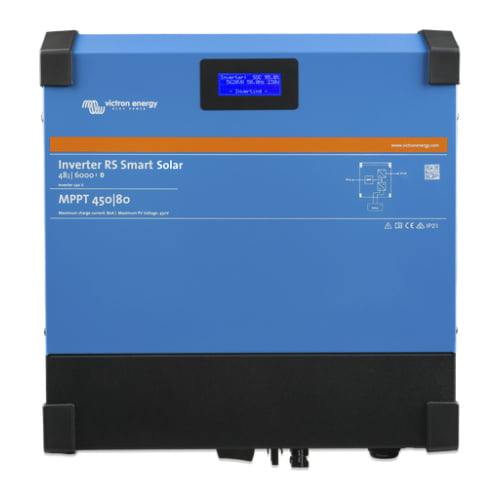
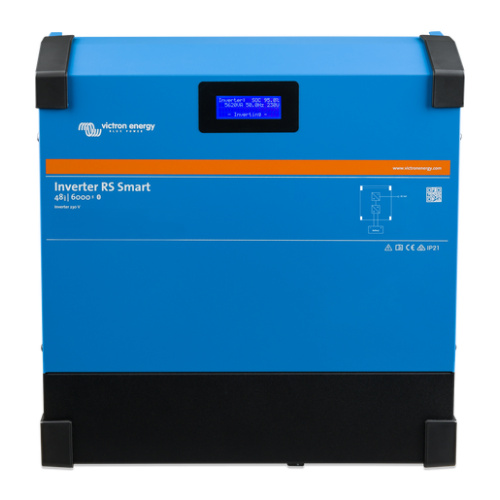
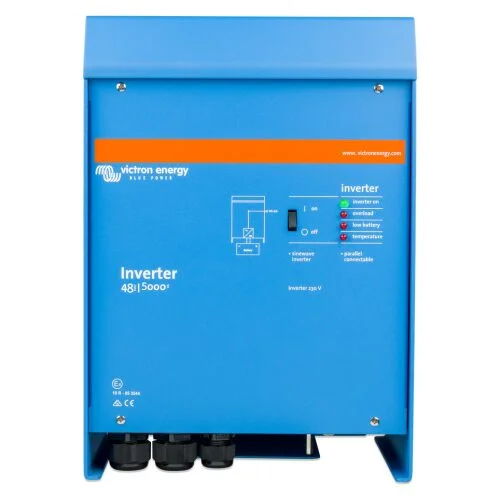
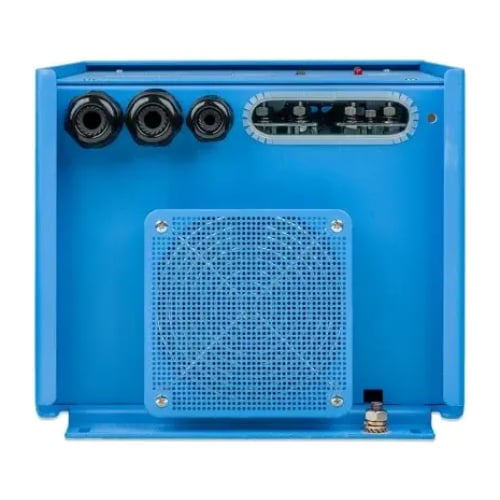
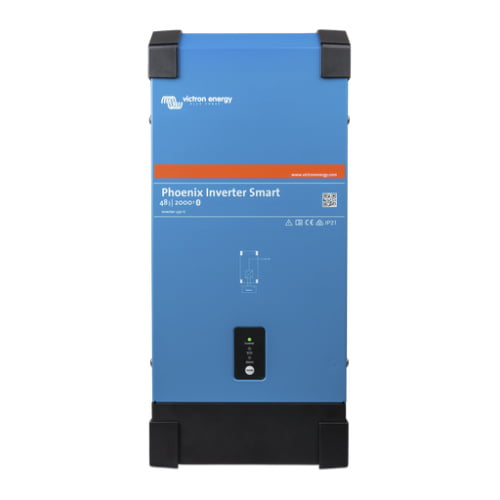
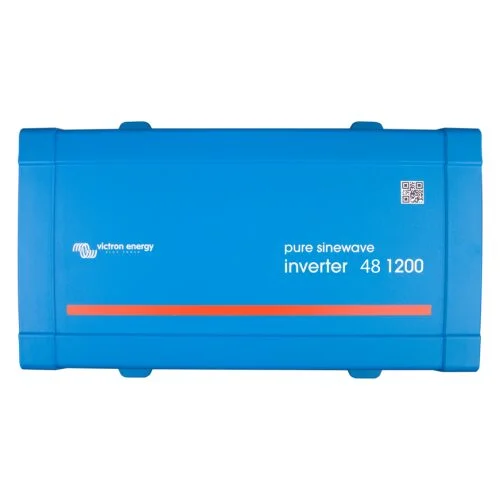
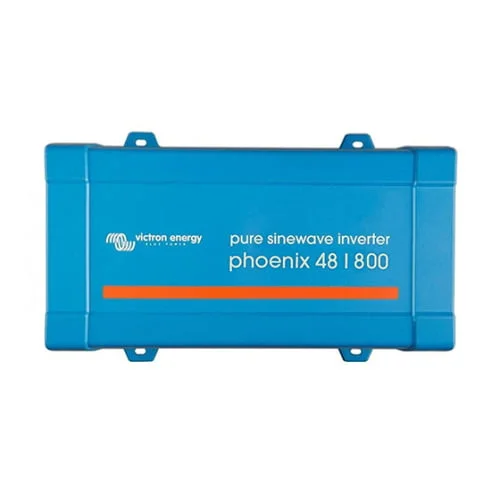
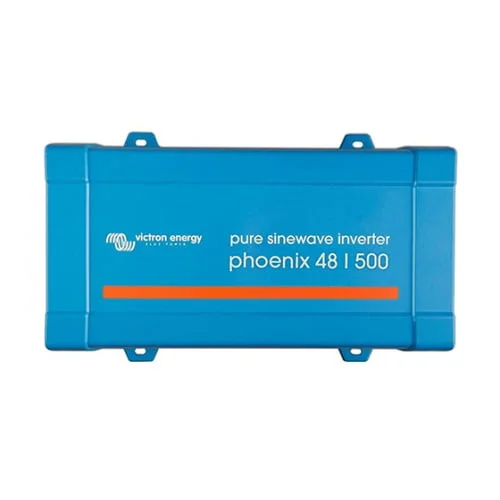
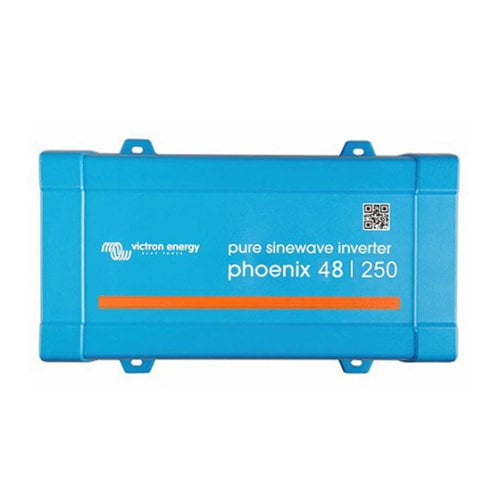
A 48V to 220V inverter is a device that converts the energy from a 48-volt battery bank into 230 V alternating current. This is the standard configuration in off-grid homes and domestic energy storage systems, because at 48 V the current is a quarter of that at 12 V for the same power output.
Why 48V in large installations?
A 5,000 W, 12-volt inverter would require more than 400 A from the battery: cables as thick as a hose, enormous fuses and significant power losses over every metre of cable. The same inverter at 48 V operates at around 105 A, a figure that is perfectly manageable with 35 mm² cable.
That is why anything exceeding 3,000 W — a detached house, a home backup system, a warehouse — is set up to run at 48 volts. Furthermore, the 48V lithium batteries Rack-mounted systems are currently the most mature product on the market and offer the best price per kWh.
48V inverter or inverter-charger
In an off-grid or backup installation, the standard setup is not simply an inverter but a 48V inverter-charger such as the MultiPlus-II or Quattro. As well as converting power, it charges the battery bank from the mains or a generator and switches over automatically when the mains supply fails, without anything in the house switching off.
This range can also be connected in parallel to increase power and configured for three-phase operation, which means you can start with a single unit and expand without having to replace anything.
How much power do I need?
This refers to the maximum simultaneous power consumption of the property, not the total power consumption. A house without high-power appliances requires 3,000 W; with an induction hob or heat pump, 5,000 W is the standard; above that, several appliances are used in parallel.
If the system is connected to the grid with self-consumption and batteries, also take a look at the hybrid inverters, which combine solar generation, the grid and storage in a single unit.
What does an investor need?
A 48 V battery bank with CAN communication to the inverter, so that the inverter is aware of the actual state of charge; a Cerbo GX if you want to monitor and control the installation remotely; a energy meter if a network is involved; and the corresponding protection for fuses and calculated cable cross-section.
We distribute Victron Energy across the entire 48 V range. Tell us what your power consumption is and whether mains power is available, and we’ll suggest the right configuration for you: technical enquiry free of charge.