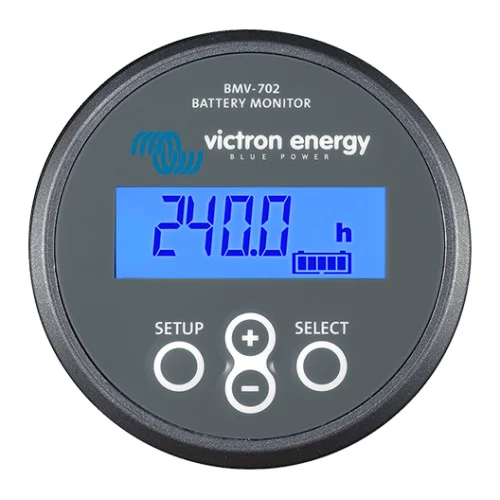
A battery monitor — also known as a coulomb meter or battery monitor— measures the state of charge (SOC), voltage, current and temperature of a solar installation’s battery bank in real time. Without it, you cannot tell how much energy you have available or whether the battery is charging and discharging correctly, which can lead to over-discharging that shortens its service life.
Why isn’t it enough just to check the battery voltage?
Because voltage only tells the truth when the battery is at rest. A 12.4 V lead-acid battery may read 75 % if it has been at rest for hours, or 40 % if it is currently delivering current: the internal voltage drop masks its actual state. And in lithium The problem is even worse, because the discharge curve is so flat that there is barely two tenths of a volt between the 80 % and the 20 % in terms of charge.
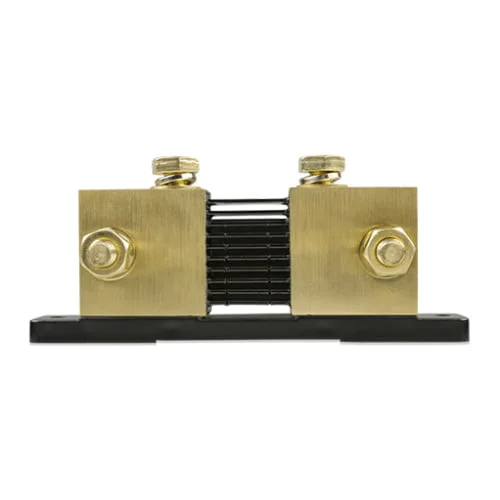
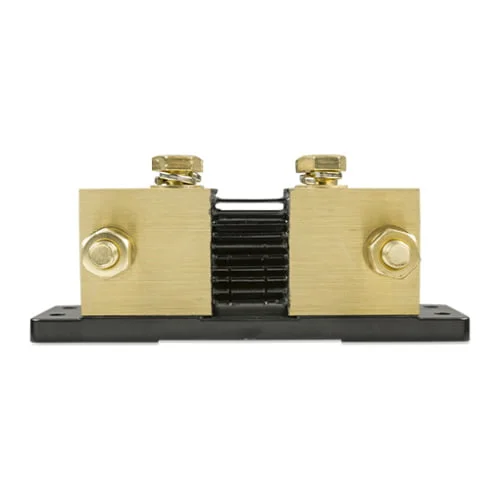
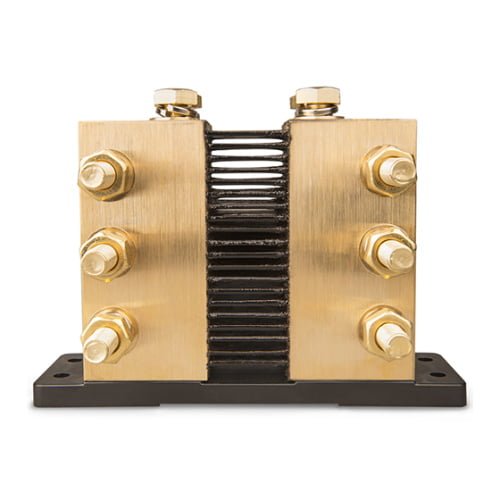
The monitor resolves this by counting ampere-hours flowing in and out via a shunt connected to the negative terminal of the battery bank. It does not estimate: it integrates current over time. That is why it provides a reliable SOC reading for any battery chemistry.
Which Victron battery monitor should I choose?
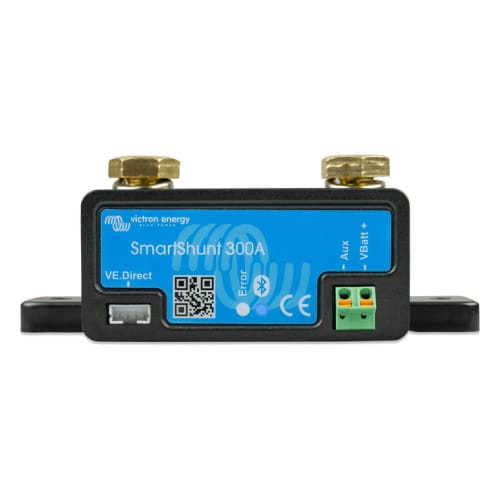
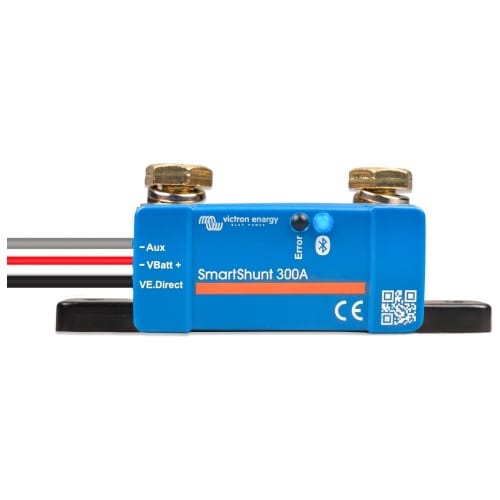
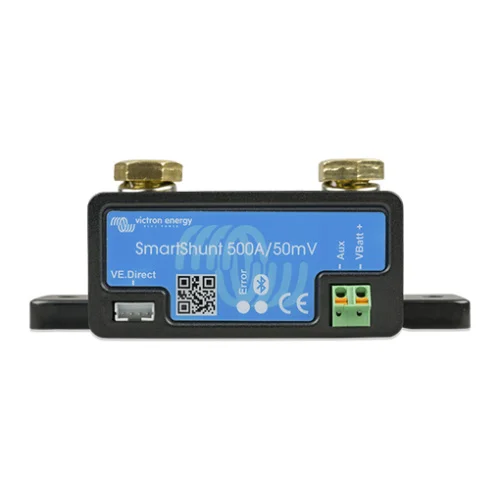
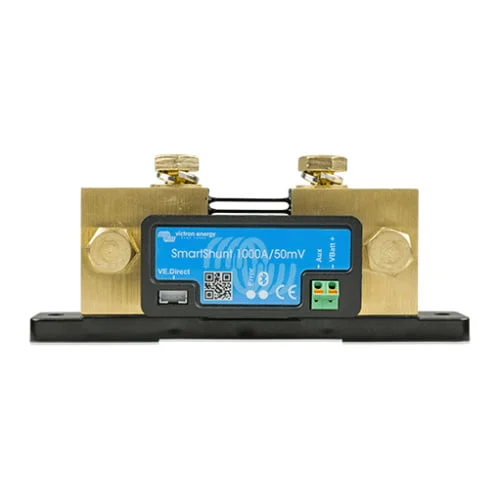
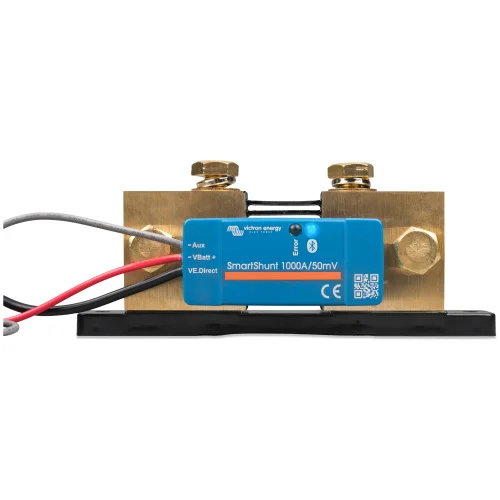
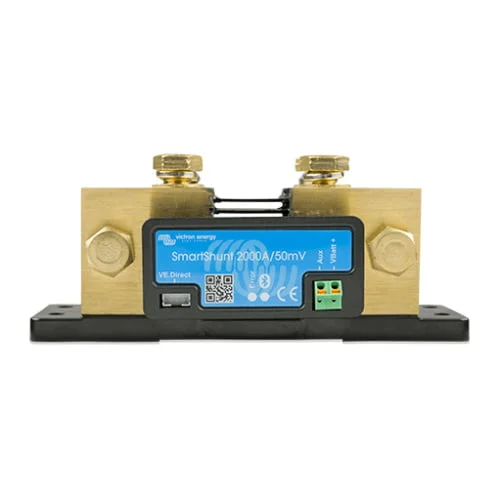
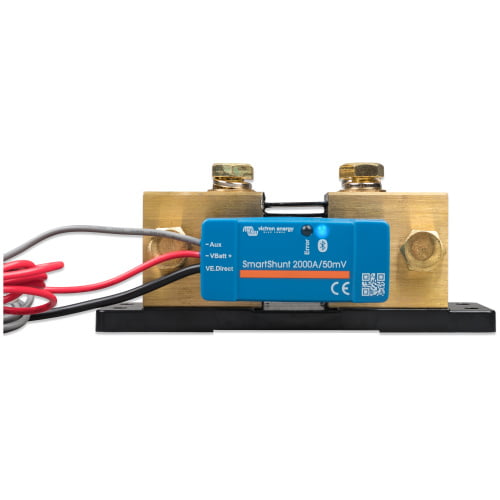
- SmartShunt: the best-selling model. It does not have its own display: it shows the data in the VictronConnect app via Bluetooth or on a Cerbo GX by VE.Direct. Available in 300 A, 500 A, 1000 A and 2000 A, and in an IP65 version for outdoor or damp environments. For most domestic and campervan installations, the 300 A model is more than sufficient.
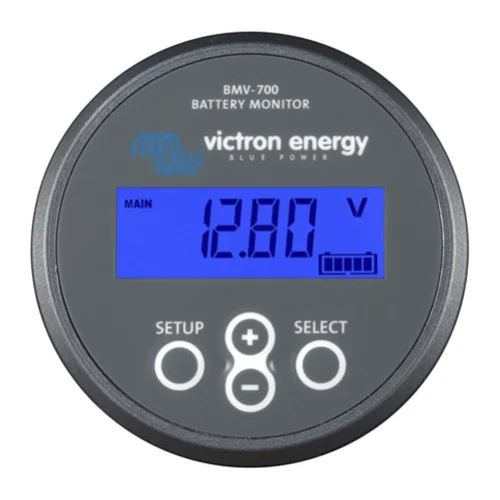
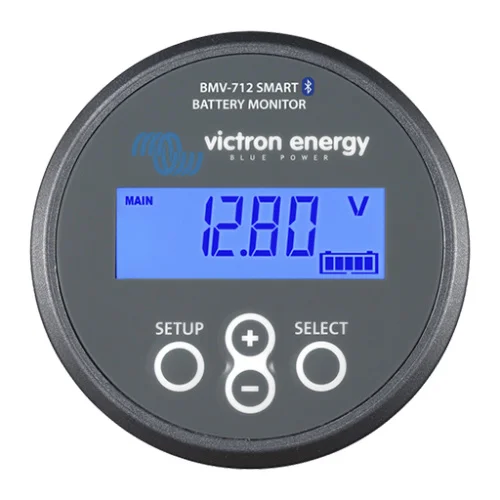
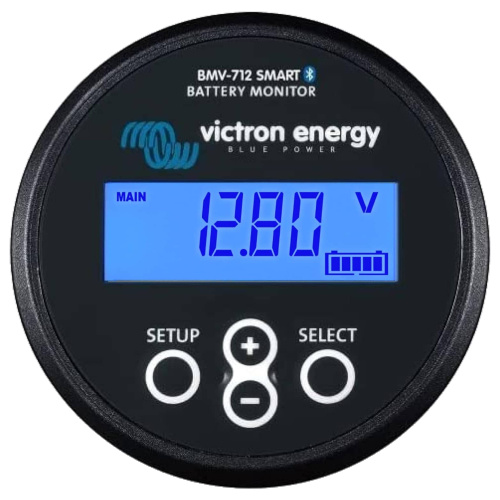
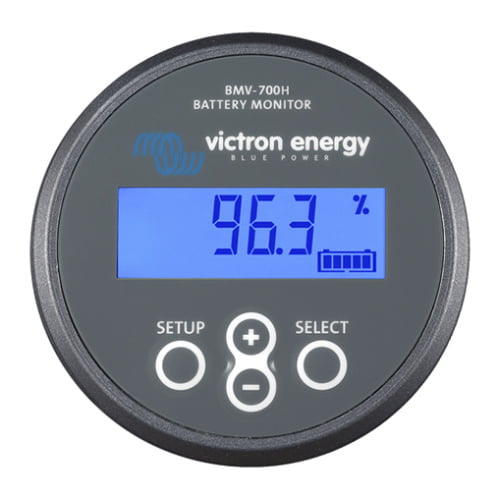
- BMV-712 Smart: The same principle, but with an LCD screen and Bluetooth. The ideal option when you want to check the status without taking out your mobile or relying on a GX.
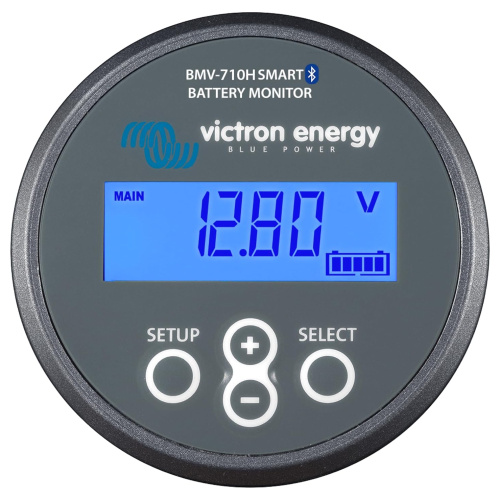
- BMV-710H Smart: the high-voltage version, from 70 to 350 VDC, for battery banks operating well above 48 V.
- Lynx Shunt VE.Can: Shunt integrated into the Lynx busbar system, for high-current installations where the cabling runs through a modular distribution system.
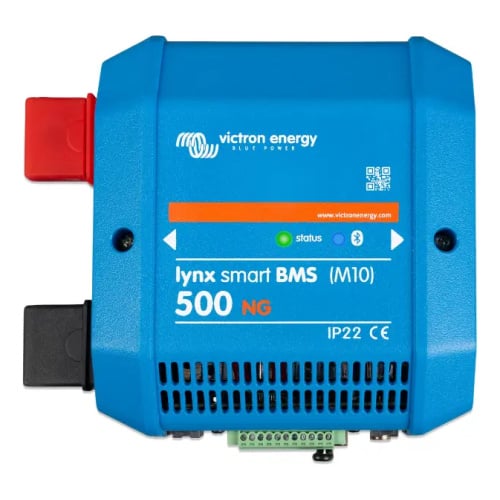
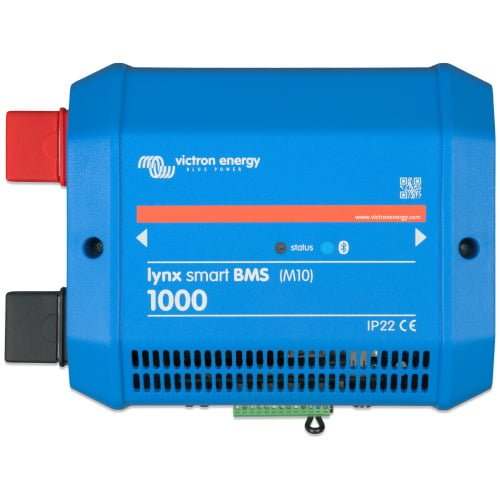
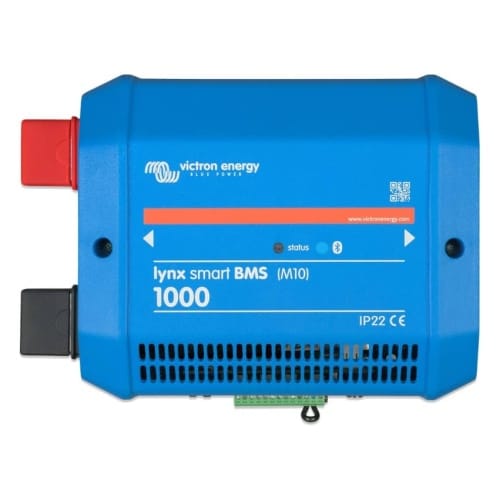
- Lynx Smart BMS: It is not just a monitor; it is the BMS for the Victron lithium batteries, with a built-in contactor and monitoring functionality included.
How is the shunt sized?
By the the maximum current that will flow through it, which is not the average consumption but the sum of the peak values: the inverter delivering its maximum power plus the charger at full load. A 3000 VA MultiPlus at 12 V can draw more than 250 A at peak, so a 300 A shunt is barely sufficient here and it is advisable to upgrade to a 500 A one.
Over-sizing comes at the expense of accuracy: the shunt measures the voltage drop across a calibrated resistor, and with currents that are very small relative to its range, the reading loses resolution. The key is to choose the step immediately above the actual peak, not two steps above.
Where is the battery monitor installed?
The shunt goes always in the red with the bank, and this is key to ensuring the measurement is correct: absolutely all power consumption and all loads must pass through it. A single negative cable connected directly to the battery terminal, bypassing the shunt, will render the SOC reading invalid for good.
The classic mistake: connecting the negative terminal of the plate charger or the fridge directly to the battery «because it’s the shortest route». From then on, the monitor will show that there is more power than there actually is.
Do I need a monitor if I already have a BMS?
It depends on what information your BMS provides. A lithium battery BMS protects the cells, balances them and cuts off power in the event of overvoltage or over-discharge, but many models do not report a reliable SOC to the rest of the system. If the BMS communicates with your inverter via CAN and reports the charge status, you do not need a monitor. If it is a standalone BMS that only provides protection, the monitor is still necessary to know how much range you have left.
Not sure which shunt your system needs? Our technical equipment It calculates the size for you. See also the BMS for lithium batteries and our solar-powered calculators.