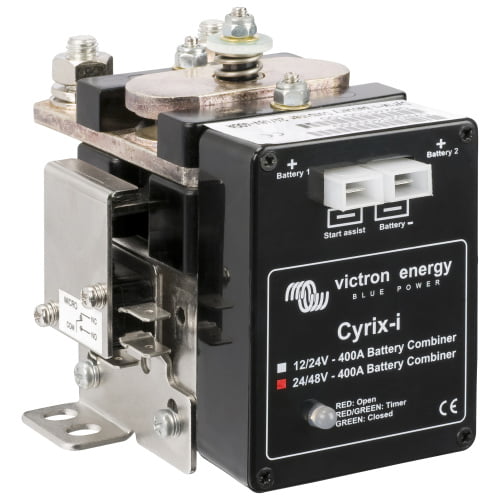
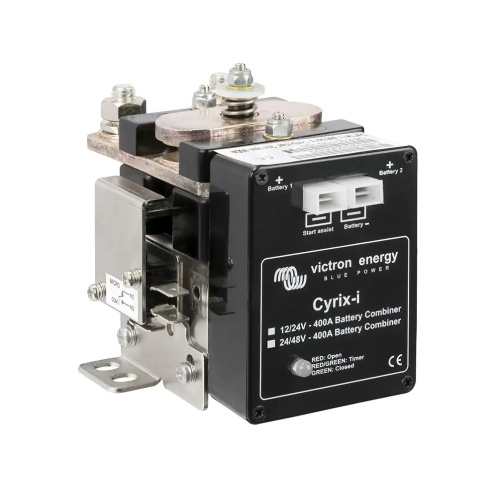
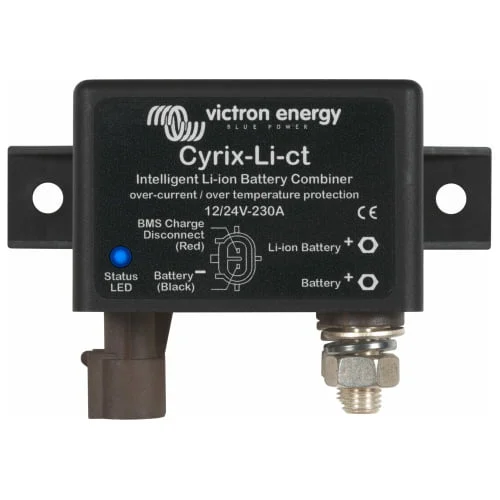
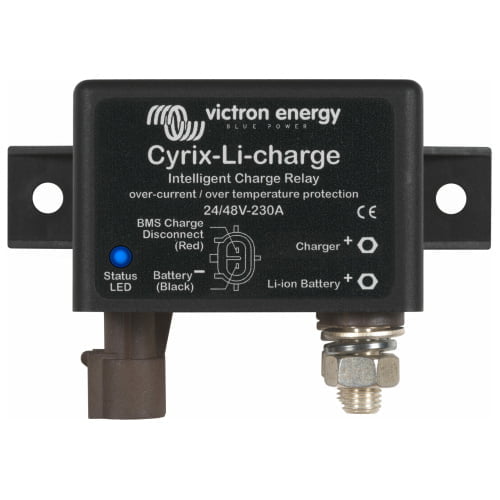
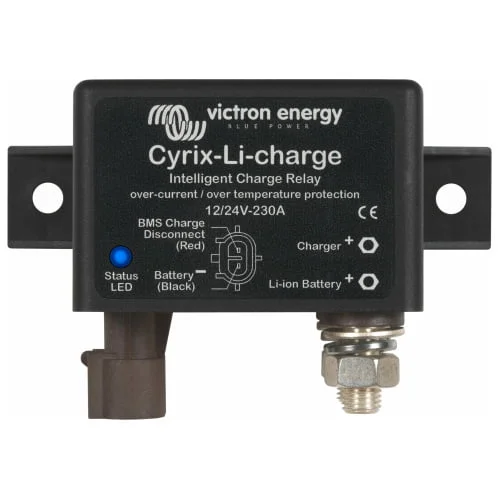
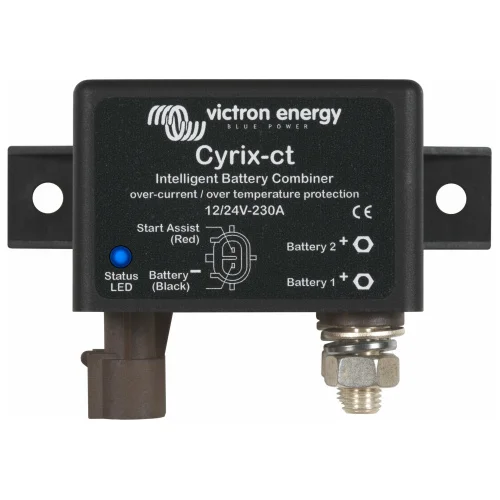
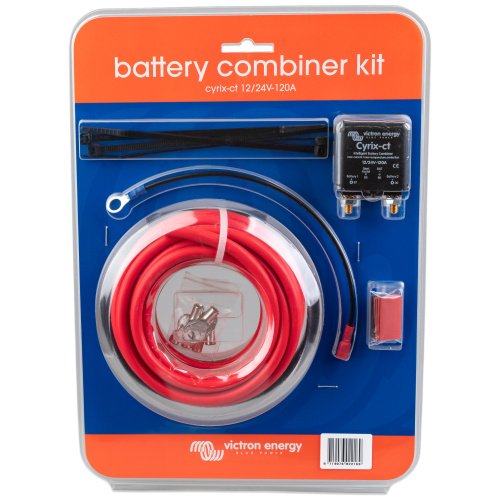
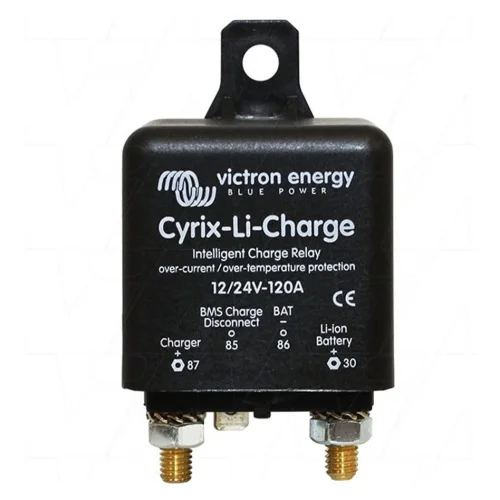
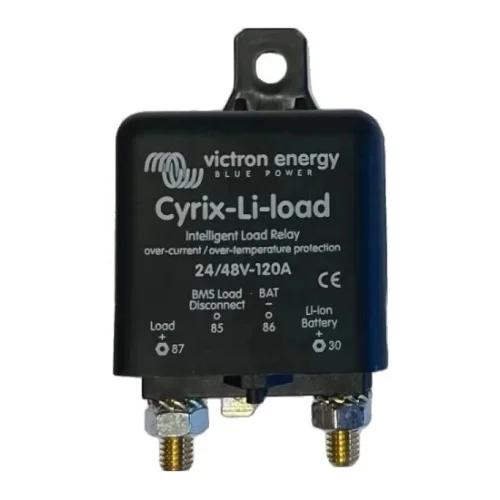
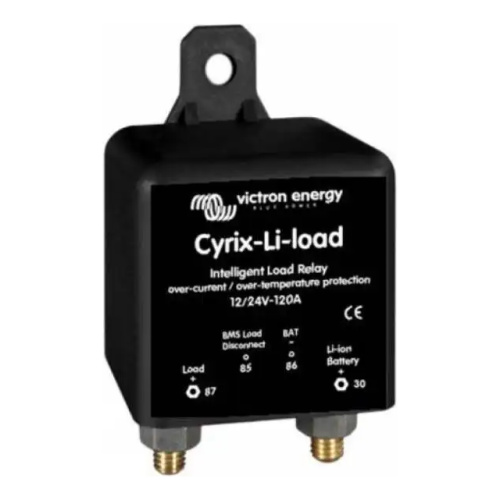
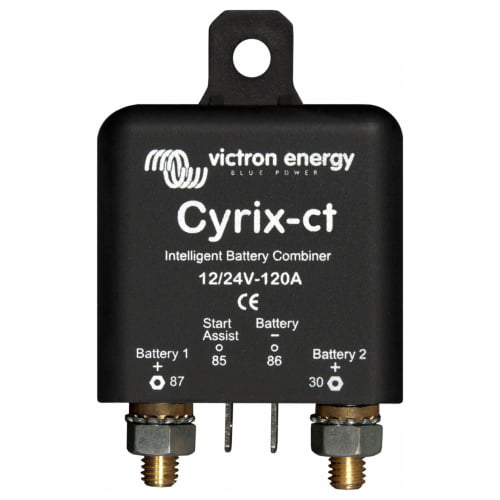
A battery combiner automatically connects two battery banks when one of them is being charged, and disconnects them when it is not. It is the simplest way to charge the service battery of a motorhome or boat from the alternator without the electrical loads draining the starter battery.
How does a battery combiner work?
It measures the voltage of the main bank. When it detects that the voltage rises above the charging threshold — indicating that the alternator or charger is operating — it closes the contact and connects the two banks so that both are charged. When the voltage drops, it disconnects them.
The result: the starter battery is never drained by the fridge or the lights, because when the vehicle is stationary, the battery banks are isolated.
A combiner or a DC-DC converter?
The combiner is cheaper and simpler, but does not control the load profile: Connect the battery banks and let the alternator’s voltage do the rest. This works well with two lead-acid battery banks using the same technology.
The DC-DC converter It does regulate: it takes the input voltage and supplies the service battery with the appropriate charging curve. It is the only option when the service battery is a lithium and the lead-acid starter battery, or in vehicles fitted with a Euro 6 smart alternator, where the alternator voltage is not constant.
What current rating must the combiner have?
The current that flows between the banks, which in practice is determined by the alternator. For standard motorhome set-ups, 100 A models are sufficient in most cases; in marine applications with large alternators, a higher rating is required.
Select the correct cable size and the fuse for that same current, with a fuse at both ends of the connecting cable.