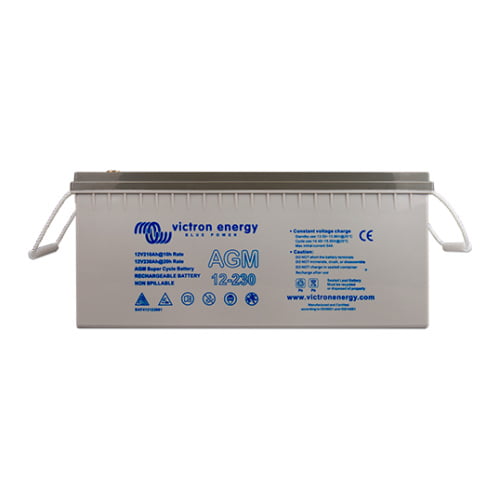
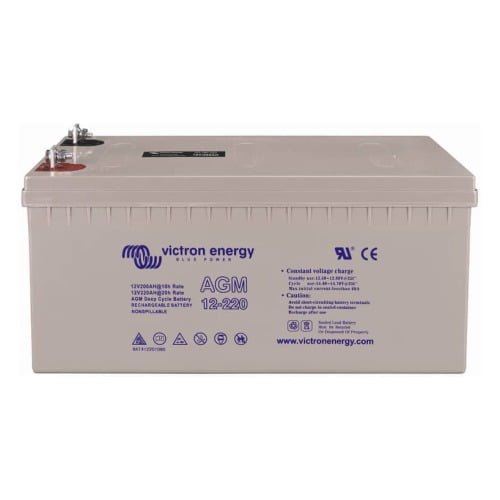
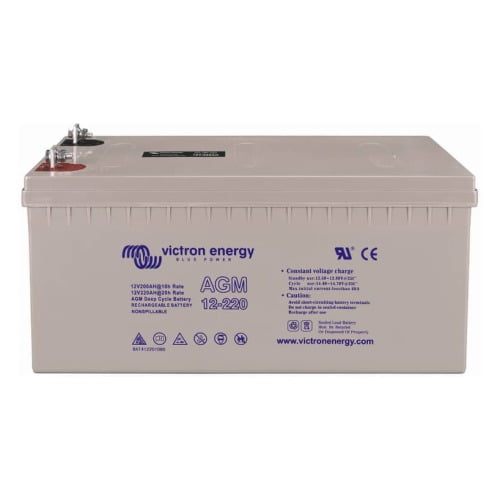
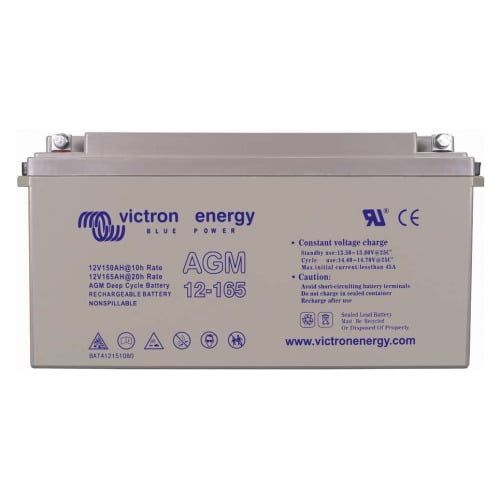
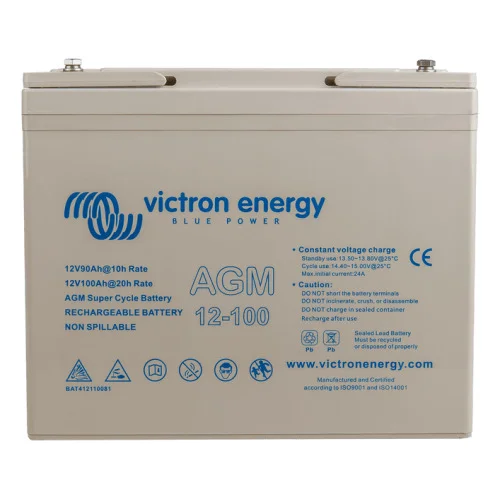
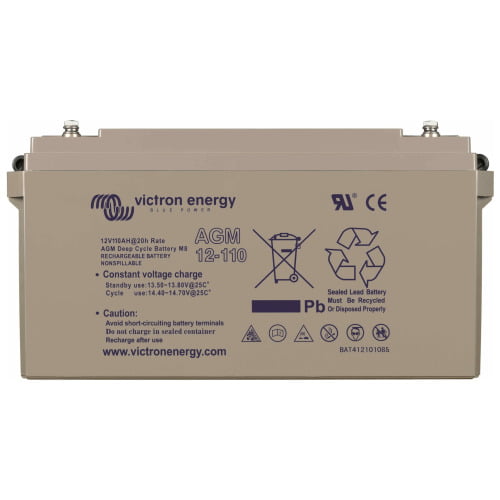
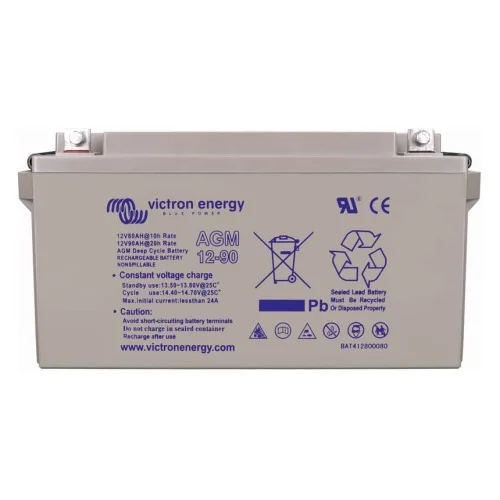
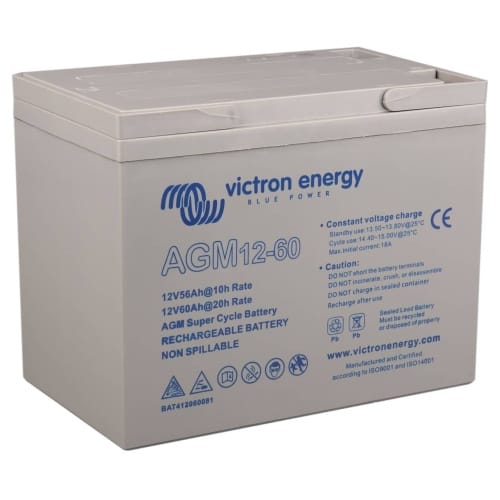
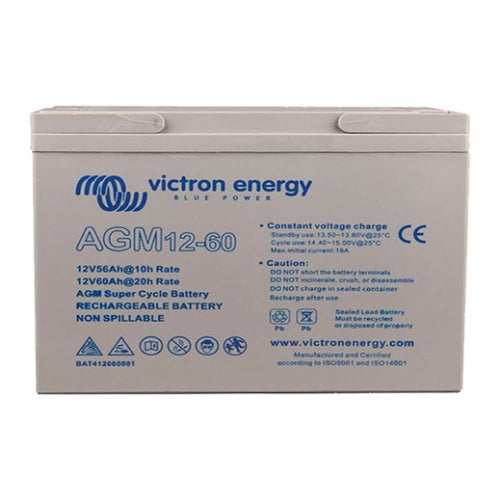
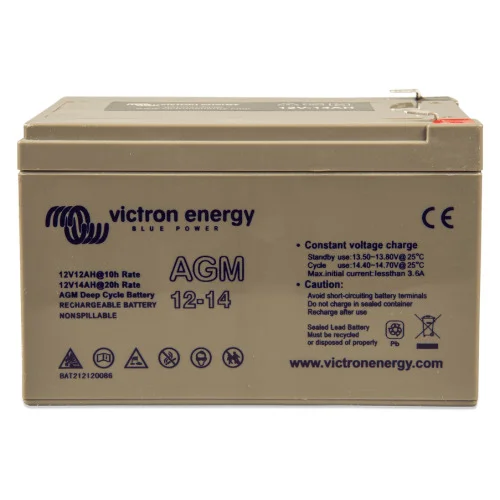
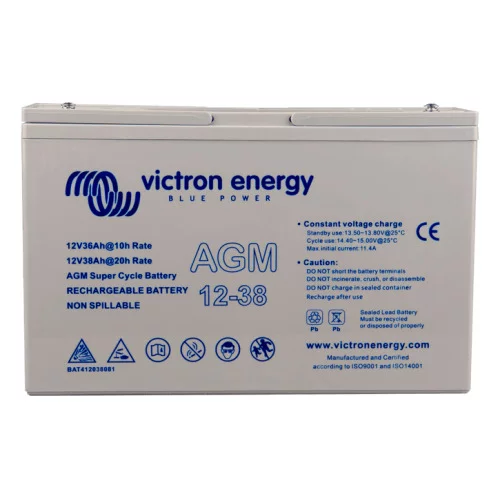
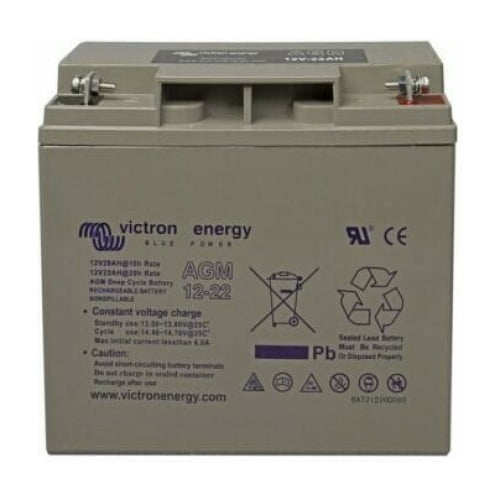
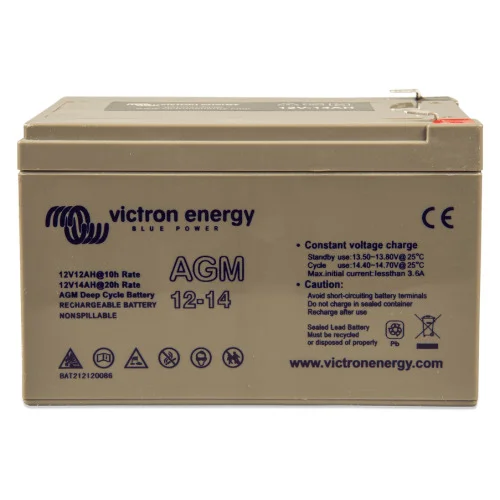
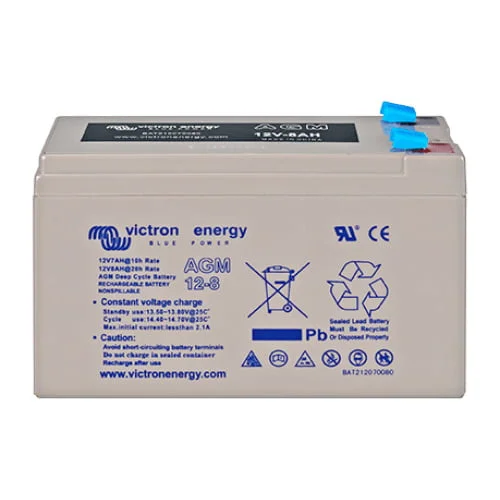
AGM batteries (Absorbent Glass Mat) are sealed lead-acid batteries in which the electrolyte is absorbed into a fibreglass mat. This eliminates the risk of leakage and allows them to be installed in any position. They represent the most advanced lead-acid technology: maintenance-free, with greater resistance to vibration than flooded lead-acid batteries, and compatible with any conventional charger or MPPT regulator.
What is the difference between AGM, gel and open-lead batteries?
All three are lead-acid batteries and share the same chemistry; what differs is how the electrolyte is contained.
- Open (flooded) lead: Liquid electrolyte. Cheaper per ampere-hour, but requires water topping up, ventilation and must be kept strictly upright. It still makes sense for large, fixed installations where maintenance is carried out.
- AGM: Glass-fibre-bound electrolyte. Maintenance-free, it can handle high charge and discharge currents thanks to its low internal resistance, and withstands vibration well. It is the ideal choice for marine, motorhome and backup power systems.
- Gel: gel-filled electrolyte. It withstands deep discharges and sustained heat better, but allows a lower charging current. It is best suited to remote installations with low cycling rates and in hot climates.
How many cycles does an AGM battery last?
The cycle life of a lead-acid battery depends directly on the depth of discharge, and the relationship is not linear: discharging to 50 % rather than 80 % does not just give a slightly longer life, it gives well over double the life.
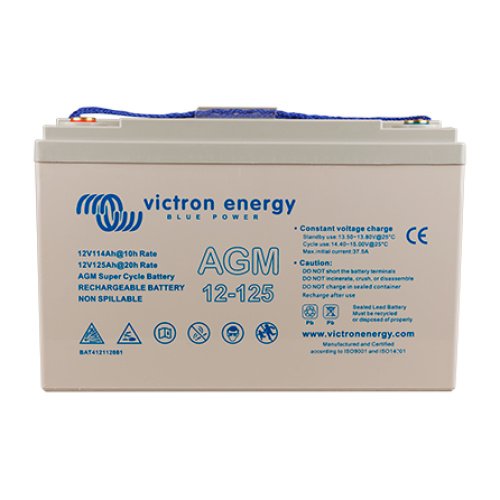
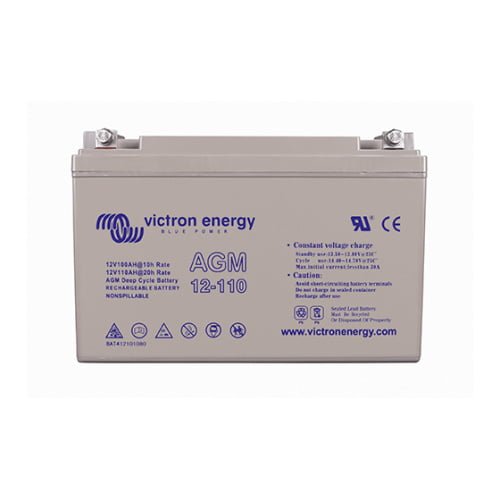
The AGM Deep Cycle Victron cells guarantee a minimum of 500 cycles at 50 % discharge. The AGM Super Cycle, with thicker plates, achieve 750 cycles at 80 % discharge: a 50 % increase in service life, even when discharged much more deeply.
In practical terms: if you’re going to cycle it every day, size the bank so that it doesn’t fall below 50 % and the battery will last for years. If you only need occasional backup, you can push it a bit further.
What AGM capacity do I need?
Take your daily consumption in ampere-hours and divide it by the depth of discharge you intend to allow. If you consume 60 Ah a day and want to stay within 50 %, you need at least 120 Ah of usable capacity, not 60.
And add the factor that is most often overlooked in lead: the capacity depends on the discharge rate. A 100 Ah battery rated at C20 (20-hour discharge rate) does not deliver 100 Ah if you discharge it in 5 hours; it delivers considerably less. If your usage is intensive and short-term — such as an inverter powering heavy loads — you need to select a battery with a higher capacity than the catalogue specification.
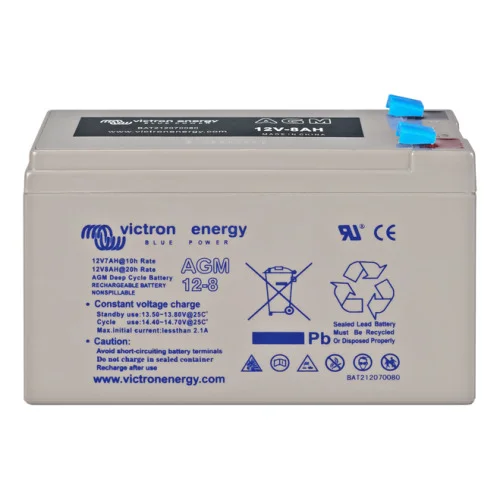
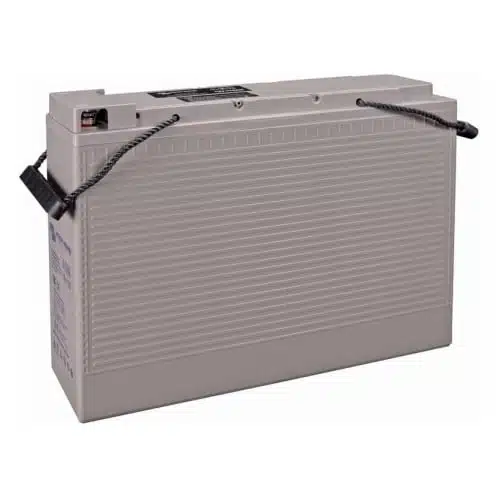
We have the following in our catalogue: AGM Deep Cycle batteries from 22 Ah to 240 Ah at 12 V y AGM Super Cycle in 125 Ah, 170 Ah and 230 Ah, all from Victron Energy.
How do you charge an AGM battery correctly?
With a three-stage charger and a specific AGM profile: bulk at constant current, absorption at a constant voltage for as long as it takes to complete the charge, and flotation reduced voltage for maintenance.
The recommended charging current is between 10 % and 20 % of the rated capacity: for a 200 Ah battery bank, between 20 A and 40 A. Charging too quickly heats up the battery; charging too slowly prevents full absorption and causes the plates to sulphate.
The temperature compensation It is not optional in south-eastern Spain: at temperatures above 25 °C, the absorption voltage must be reduced, otherwise the battery will gas and lose electrolyte, which cannot be replenished in a sealed AGM battery. The Blue Smart chargersThe SmartSolar MPPT controllers and the MultiPlus and Victron inverters come with pre-configured AGM profiles and support a temperature sensor.
Should I choose AGM or lithium for my system?
The AGM continues to perform better in three scenarios: tight budgets, use as a backup with low cycling, and sub-zero temperatures where lithium batteries cannot be charged without a heater.
The lithium It outperforms in every other respect: three to five times as many cycles, half the weight, it allows for almost complete discharge and can handle much higher charging currents, which, in a solar installation, means making better use of the middle of the day.
Our approach: if the battery is cycled daily, the cost per lithium cycle works out lower, even if the initial investment is higher. If it’s a backup system that operates four times a year, the AGM is the more sensible choice. Would you like us to work it out using your figures? Our technical equipment advises you.