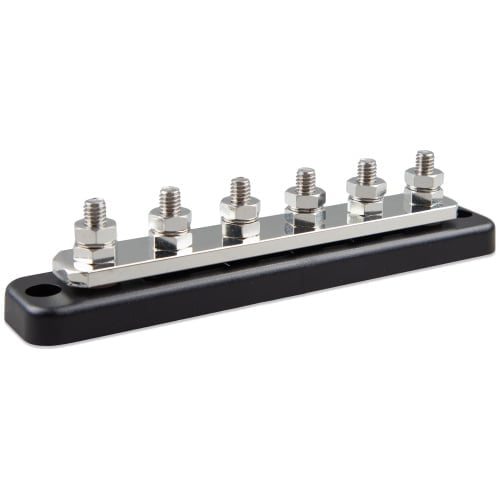
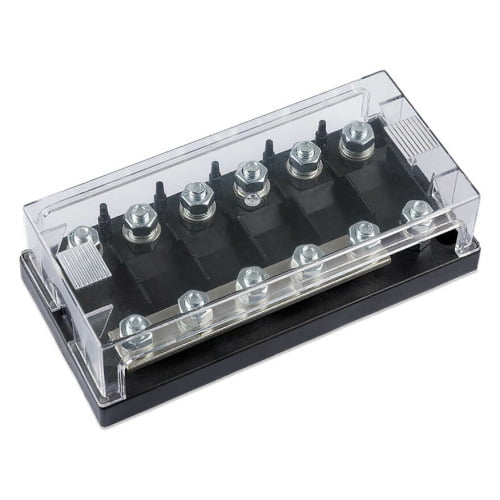
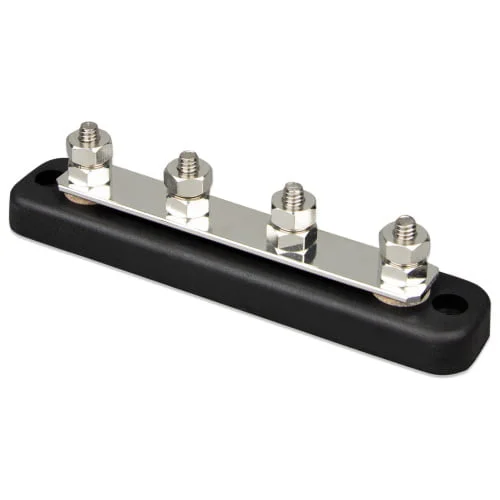
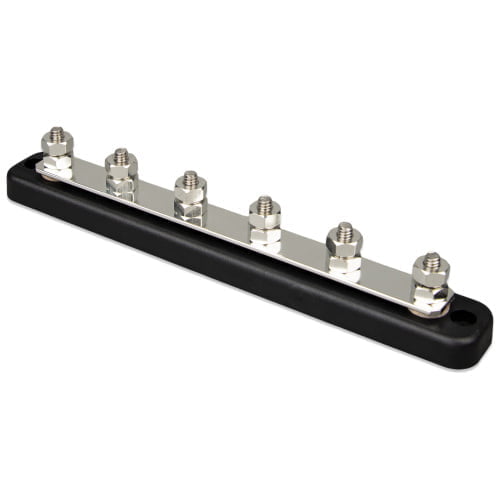
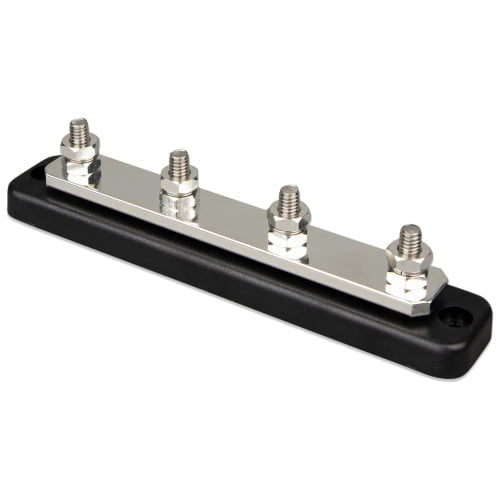
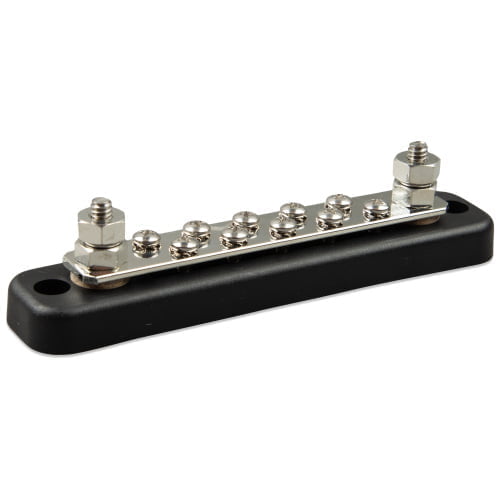
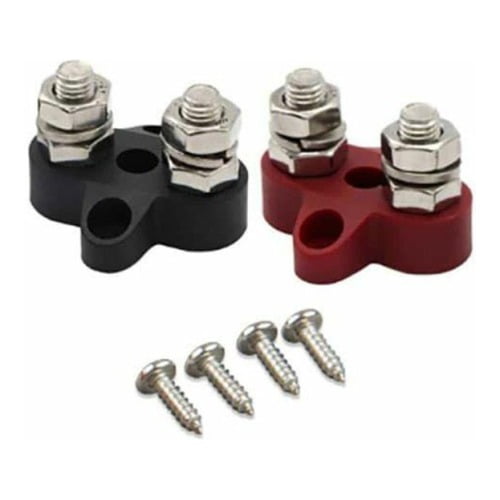
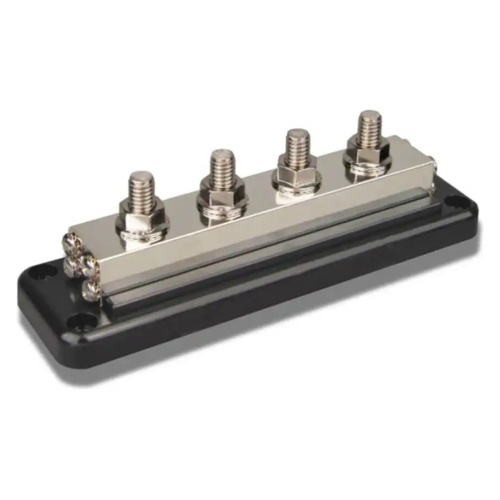
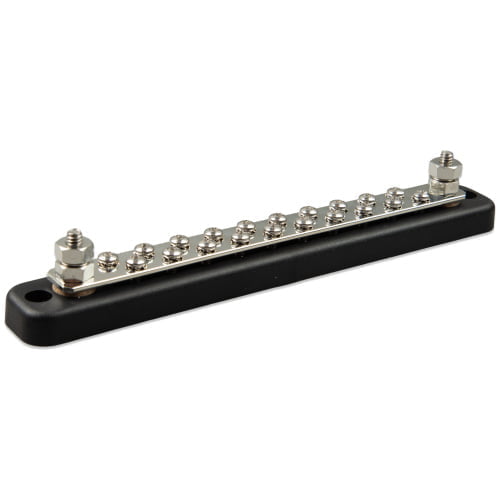
A busbar is a piece of brass or copper to which several cables are connected to a single battery terminal. It replaces the stacking of terminals on the terminal block, which is one of the points where the most faults occur in direct current installations.
What is a distribution bar used for?
In a 12- or 24-volt system powered by the same battery, there are easily five or six power consumers: the inverter, solar regulator, charger, booster, power distribution unit and the battery monitor. Connecting six terminals to a single terminal block leads to loose connections, overheating and a fault that is difficult to pinpoint.
The busbar distributes these connections to individual screw terminals with a cross-sectional area far greater than that of the cable, so that each load has its own connection point, tightened to the correct torque and easily accessible.
How to choose the right busbar
Rated current. It must be capable of handling the sum of the currents that will flow through it in the worst-case scenario. Common models are rated at 150, 250, 400 and 600 A.
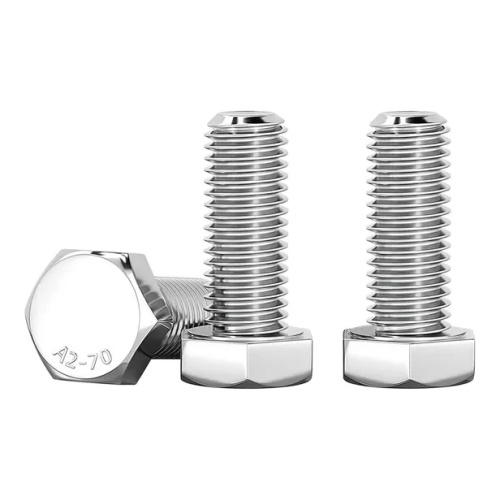
Number and size of screws. The M8 and M10 busbars These are the most commonly used in photovoltaic installations; the size must match that of your cable terminals.
Insulating cover. Essential: an exposed busbar near a battery is a short circuit just waiting for a spanner to fall on it.
12V busbar and Lynx systems
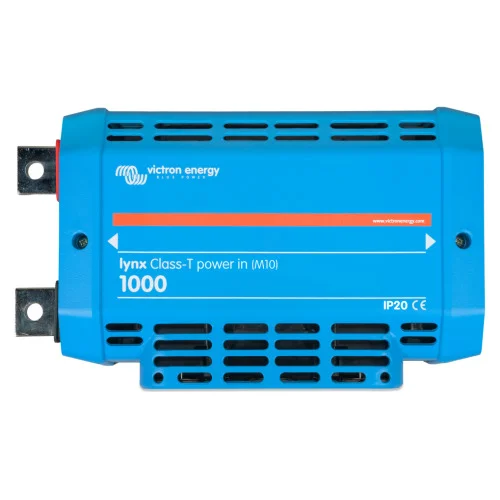
In small installations, one positive bar and one negative bar are sufficient. In larger systems, Lynx-type solutions from Victron They integrate the distribution board, the fuse holders for each circuit and the battery monitor into a single module, which reduces the amount of wiring required and makes the whole assembly much neater and easier to maintain.
What goes with it
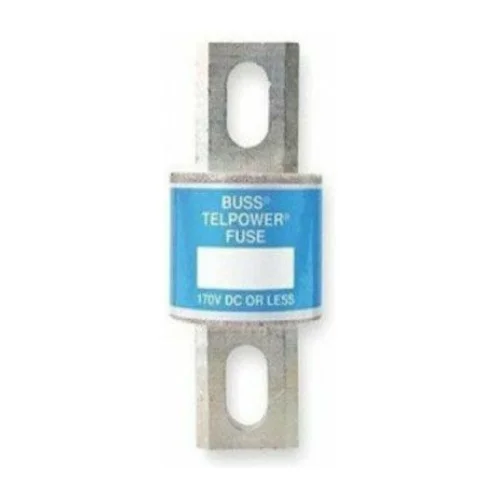
Each branch leading off the busbar requires its own fuse the correct size for the cable it protects, properly crimped terminals of the correct size, and cable of the appropriate cross-section — check this in the Cross-section table by power rating.
Tell us how many loads you’re going to hang up and what maximum current you expect, and we’ll tell you which rail you need: free advice.