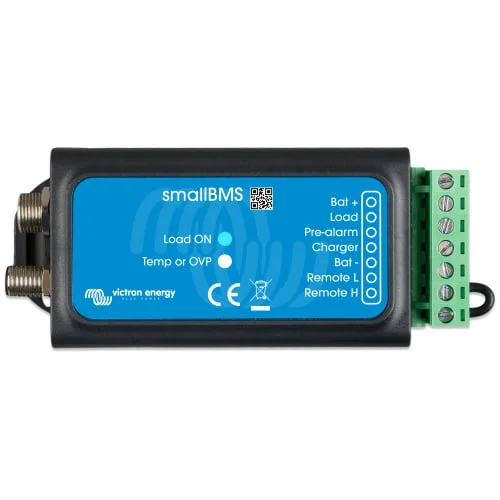
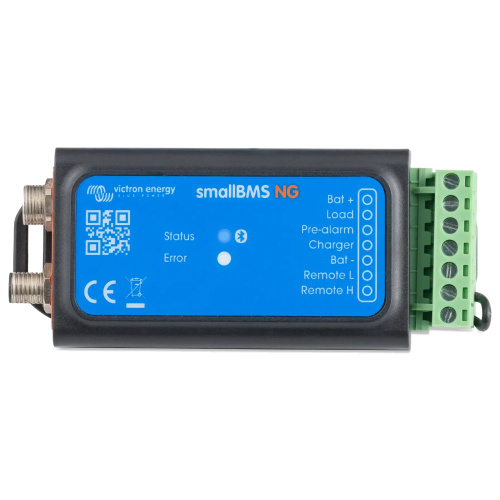
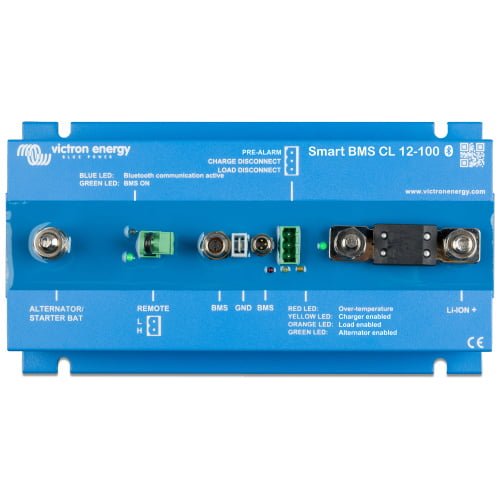
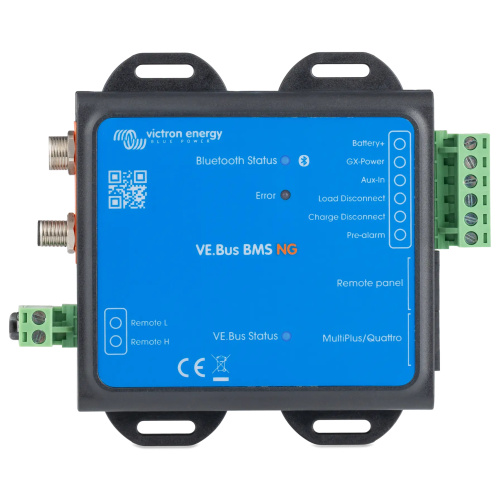
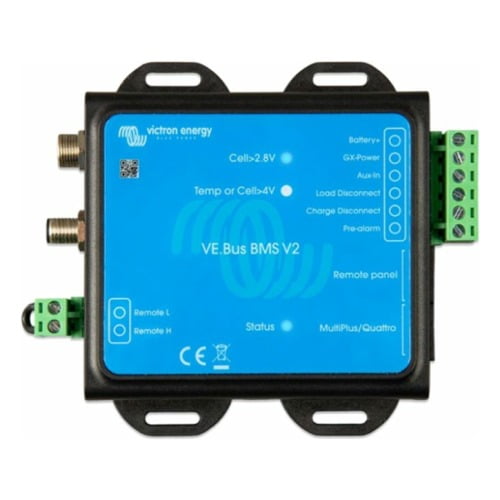
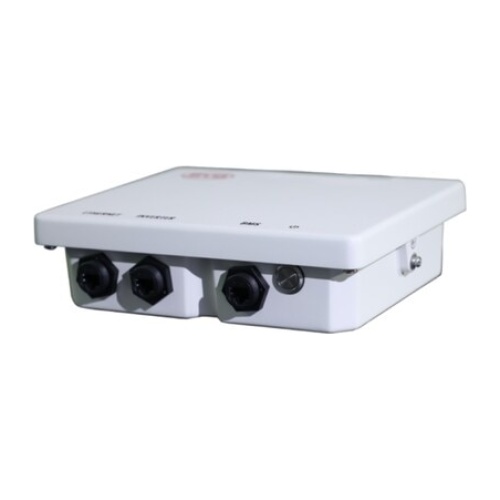
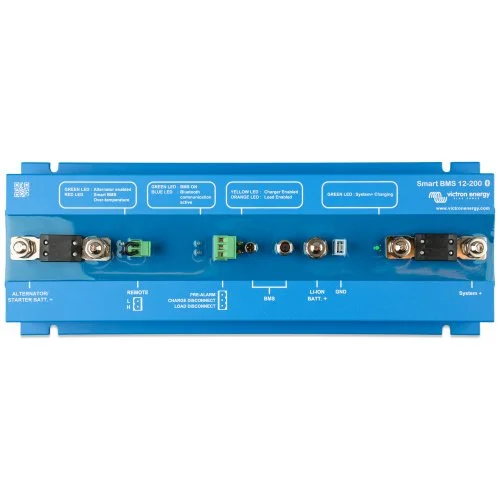
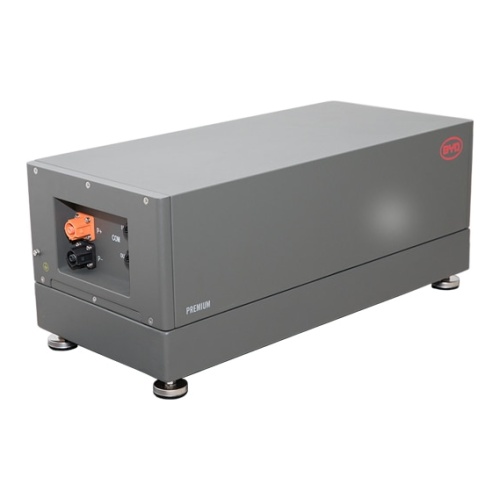
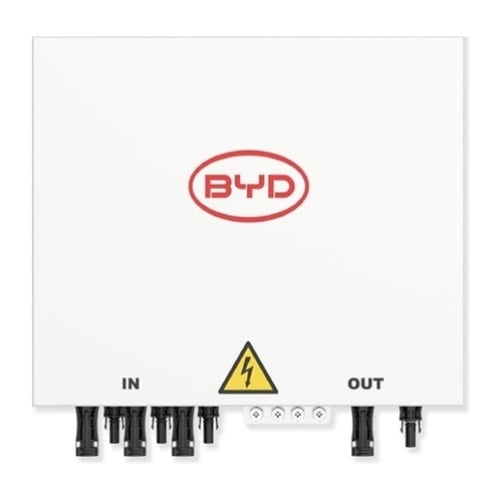
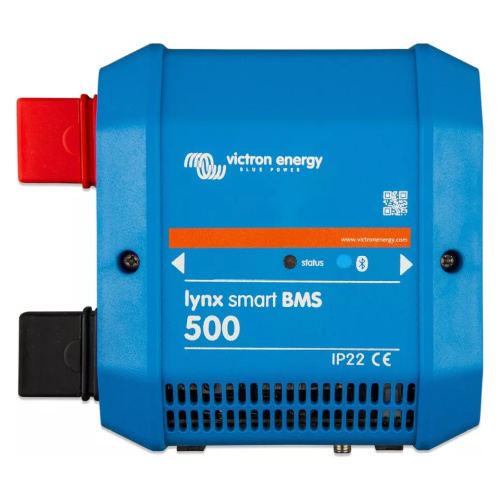
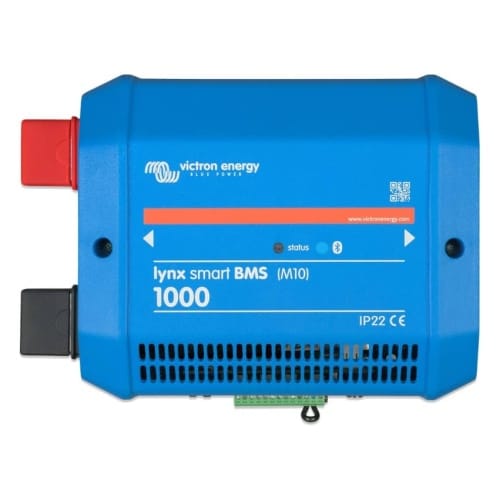
The BMS — Battery Management System — is the electronic system that monitors and protects a lithium battery. Without it, a LiFePO4 battery cannot be used safely: it is the component that prevents a cell from overcharging, the battery pack from discharging below its limit, or from operating outside its temperature range.
What is the BMS in a lithium battery?
A 12V lithium battery consists of four cells in series, and a 48V battery consists of sixteen. These cells do not age in exactly the same way: as they undergo charging and discharging cycles, they become unbalanced, and as soon as one reaches its maximum voltage first, it begins to degrade much faster than the rest.
The BMS does four things: it measures the voltage of each individual cell, balances them against one another, cuts off charging or discharging when any cell falls outside the specified range, and protects against temperatures outside the operating limits. With a lead-acid battery, none of this is necessary; with a lithium battery, it is what distinguishes a bank that lasts twelve years from one that fails within two.
Integrated BMS or external BMS
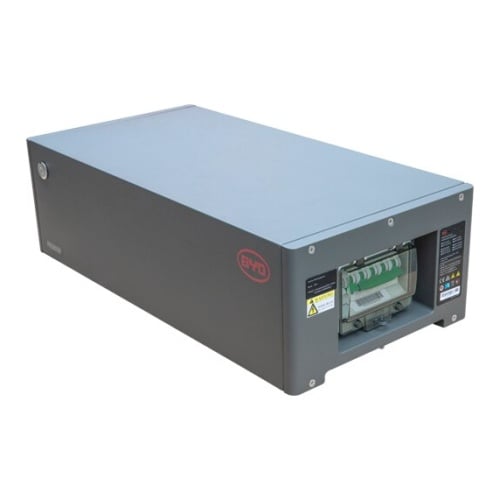
Commercial lithium batteries —Pylontech, Pytes, the Victron SuperPack and the NG series—already have a built-in BMS. They are installed just like a conventional battery and you don’t need anything else.
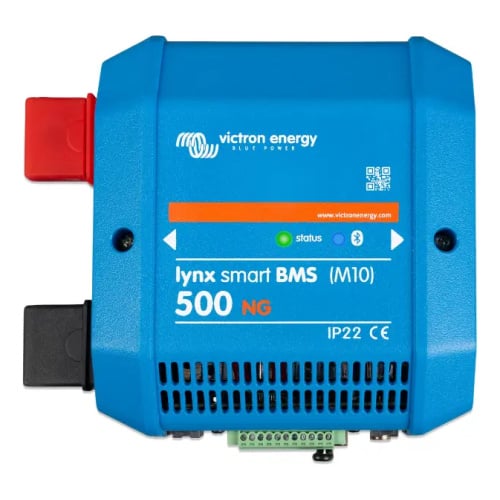
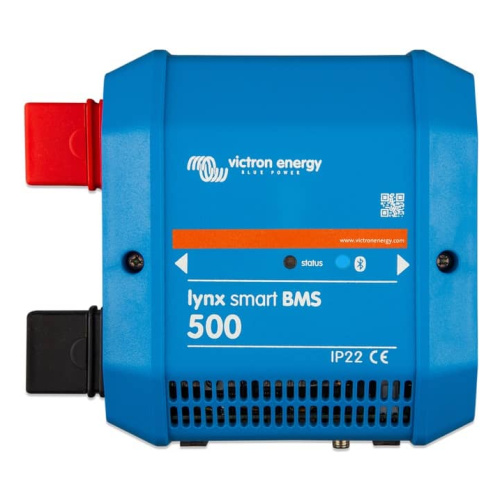
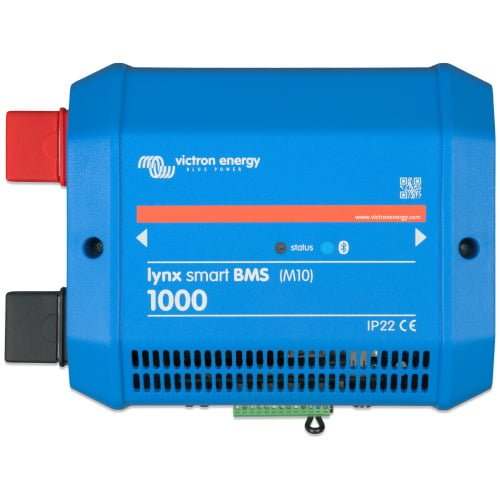
An external BMS is required in two scenarios: when you assemble individual cells to build a bespoke battery bank, and when you use Victron Smart Series batteries, which separate the battery from the BMS to allow for more flexible series and parallel configurations.
BMS for 12V and 48V lithium batteries
The system voltage determines the model. A BMS for 12V lithium battery manages 4 cells; one for 48V lithium battery, 16. As well as the number of cells, you need to take into account the maximum charge and discharge current: a BMS that cuts off below the peak current required by your inverter will bring your system to a standstill every time a heavy load is applied.
The other criterion is communication. A BMS that communicates with the inverter via CAN enables the inverter to determine the actual charge status and adjust currents accordingly. In the Victron ecosystem, this takes the form of DVCC control, which ensures that the system charges optimally without the need for manual configuration.
What else do you need to protect the bench?
The BMS is not a substitute for electrical protection. A lithium battery pack also requires its fuse correctly sized, a battery protector for sensitive loads and, if you really want to see what happens, a battery monitor SmartShunt type.
Tell us how many cells your battery pack has, what voltage it operates at and what inverter it uses, and we’ll tell you which BMS is suitable. Technical enquiry free of charge.