How to install CCTV cameras where there is no mains power supply
Author: David Conesa Albaladejo
Publication date: 24 September 2026
Last updated: 24 September 2026
Quick answer: To install CCTV cameras in places where there is no mains electricity, you need a small off-grid solar system: solar panel + charge controller + lithium battery which supplies 12 V to the IP cameras and a 4G router so you can view them on your mobile. If it’s the right size, it works 24 hours a day, even at night and on several consecutive cloudy days. In this guide, we explain how to work it out step by step and what mistakes to avoid.
Options for monitoring a location without electricity
Country estates, country cottages, vegetable gardens, building sites, agricultural sheds, car parks or access roads to housing estates: these are places where surveillance is needed and there’s almost never a power socket nearby. These are the real alternatives:
Option
Advantages
Drawbacks
Solar-powered camera with built-in battery
Inexpensive and easy to fit
It only records when it detects movement, runs out of battery in winter and relies on Wi-Fi or its own SIM card
To carry the current from the internet
Unlimited energy
Trenching, cabling and administrative procedures: once you’ve gone beyond a few dozen metres, it usually costs more than a solar kit
12 V off-grid solar kit
Standard IP cameras recording 24 hours a day, night vision, 4G router always connected, expandable
You need to size it correctly and fit the circuit board and watertight housing
For one or two cameras at a temporary location, a solar-powered battery camera may suffice. To properly monitor a site or a building site, with continuous recording and no unexpected power cuts in winter, the reliable option is the 12 V solar kit.
What you need to power cameras with solar energy
Solar panel: generates energy during the day.
MPPT charge controller: charges the battery whilst making the most of the board. The Victron and SmartSolar models feature Bluetooth so you can view everything from your mobile.
LiFePO4 lithium battery: it stores energy for the night and for days when there is no sun. It lasts much longer than a lead-acid battery and withstands heat better.
Surge protection: switches the cameras off if the battery level gets too low and switches them back on once they have recharged.
Fuses, disconnect switch and wiring: essential for ensuring the installation is safe.
4G router with data SIM: to view the cameras and receive notifications on your mobile.
IP cameras and, if you want to save locally, a NVR recorder.
Waterproof case for the battery and the regulator, and a bracket or post for the plate.
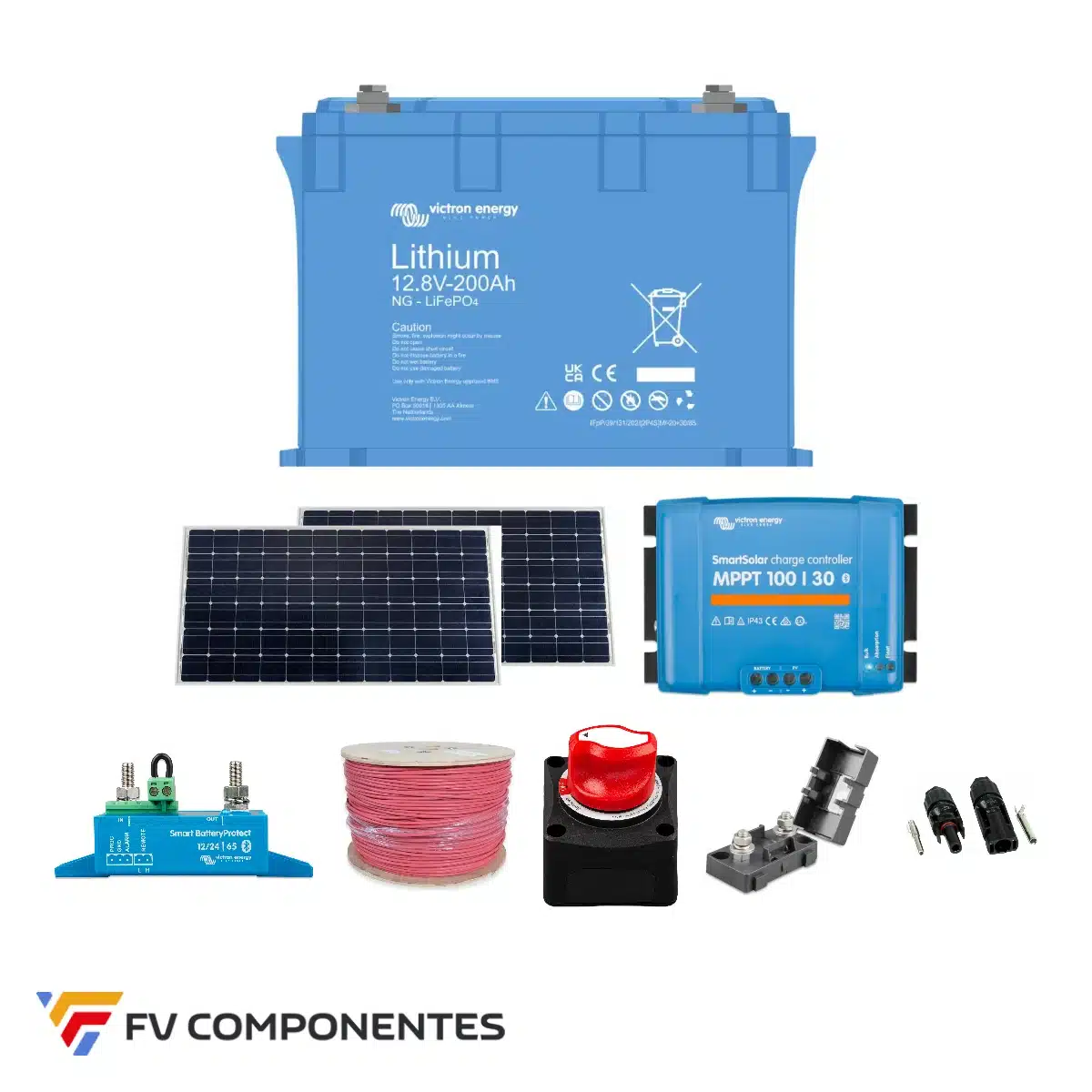
Medium-sized solar kit for CCTV cameras: 2 x 190 W panels, MPPT 100/30 and a 200 Ah lithium battery.
Step 1: Work out the power consumption of your appliances
This is the most important step. Add up the power of everything that will be switched on and multiply it by 24 hours a day:
Team
Regular consumption
Per day (24 hours)
Fixed IP camera (with infrared)
3 to 6 W
72 to 144 Wh
Motorised PTZ camera
10 to 25 W
240 to 600 Wh
4G router
3 to 6 W
72 to 144 Wh
PoE switch (without cameras)
2 to 5 W
48 to 120 Wh
NVR recorder with hard drive
6 to 15 W
144 to 360 Wh
Check your camera’s technical specifications and use the power consumption figures with the infrared lights on, which is when it uses the most power. If you can’t find this figure, assume 5 W per camera.
Step 2: Choose the battery based on the number of days without sunshine
The battery needs to last through the night and several consecutive overcast days. For video surveillance, we recommend between 3 and 4 days’ battery life. The formula is simple:
Battery capacity (Wh) = daily consumption × number of days of autonomy ÷ 0.9
The 0.9 is because it is not advisable to completely discharge a lithium battery. Example: 290 Wh/day × 4 days ÷ 0.9 ≈ 1,290 Wh, i.e. a 12.8 V, 100 Ah lithium battery (1.28 kWh).
Step 3: Calculate the plates using the winter data
Here’s the most common mistake: basing your calculations on summer sunshine. In December, a solar panel produces about a third of what it does in July. To ensure your system doesn’t shut down in winter, follow this rule:
Panel power (W) = daily consumption ÷ (peak sunshine hours in winter × 0.75)
In the south-east of the peninsula, you can expect around 3 hours of peak sunshine in December with the panel at a steep angle; in the northern half, between 1.5 and 2.5 hours. Example for 290 Wh/day in Murcia: 290 ÷ (3 × 0.75) ≈ 130 W. With a 190 W panel, you’ll have more than enough and the battery will recharge more quickly after several cloudy days.
Step 4: Regulator and safety devices
Use a regulator MPPT: It gets up to 30 % more out of the panel than a PWM controller, particularly in winter. Choose the size according to the power rating of your 12 V panels (for example, a 75/15 MPPT can handle around 220 W and a 100/30 around 440 W). Always add a fuse between the regulator and the battery, a disconnector to work safely and with a surge protection (the regulator’s load output or a BatteryProtect) so that the cameras switch off before the battery is damaged.
Step 5: Connect the cameras to a 12 V power supply, without an inverter
Many people connect a 230 V inverter and plug in the camera transformers. It works, but the inverter itself consumes several watts 24 hours a day, and each transformer loses energy: between 15 and 25 % of the total is lost. By powering the cameras, router and recorder directly from 12 V, you’ll need a smaller power supply and a smaller battery. If your cameras are PoE, use a PoE switch with a 12 V input.
Step 6: 4G connectivity and installation
4G router with a data SIM. If coverage is poor, add an external aerial.
South-facing panel and at a fairly steep angle (between 50 and 60°) to prioritise winter use. What’s more, this means it gets cleaned more effectively by the rain.
Battery and regulator in a waterproof housing, in the shade and in a well-ventilated place. Lithium batteries must not be charged at temperatures below 0 °C: in cold areas, store them in a sheltered place.
Anti-theft protection: anti-theft fastenings on the plate and the box, either mounted high up or inside a shed.
Real-life example: a property with two cameras and a 4G router
Using a small lead-acid battery: it deteriorates quickly with daily charging cycles and when exposed to heat.
Power everything using a 230 V inverter.
Do not take into account the night-time power consumption of the infrared devices.
Place the sign flat or with shadows cast by trees or buildings in winter.
Do not forget fuses and surge protection.
Ready-to-assemble solar kits for CCTV cameras
To save you having to work out the specifications or source components one by one, we have put together three kits featuring Victron equipment that is already configured for video surveillance, with a battery life of around 4 days:
Can you install a CCTV camera without a power supply or Wi-Fi?
Yes. The power is supplied by a solar kit with a battery, and the connection is provided by a 4G router with a data SIM card. This means you can view the camera and receive alerts on your mobile from anywhere.
How many solar panels does a CCTV camera need?
An IP camera with a 4G router consumes around 8 to 10 W, or about 200–250 Wh a day. In the south-east of the peninsula, a 150–200 W solar panel with a 100 Ah lithium battery is sufficient; in the north, it is advisable to increase this to around 300 W.
How long does a battery last when powering cameras?
It depends on power consumption and capacity. A 12.8 V, 100 Ah lithium battery can power 12 W for around 4 days without sunlight. With double the capacity, you can power twice as many cameras for the same length of time.
Is a battery-powered solar camera or a solar kit better?
Solar-powered cameras with a built-in battery are cheap, but they only record when they detect movement and tend to run out of power in winter. A solar kit powers standard cameras 24 hours a day, with continuous recording and the router always connected.
Can I use PoE cameras with solar power?
Yes. Connect a PoE switch with a 12 V input to the kit’s output, or a PoE injector that boosts the voltage, and add its power consumption to that of the cameras.
Does it work in winter?
Yes, if you base your calculations on December’s production figures and a battery life of 3 or 4 days. That’s why it’s so important not to use summer data for your calculations.
Does a solar installation for CCTV cameras require planning permission?
A stand-alone 12 V installation that is not connected to the mains does not require any formalities with the electricity supplier. It must, however, be fitted with the appropriate safety devices and in compliance with the Low Voltage Electrotechnical Regulations.
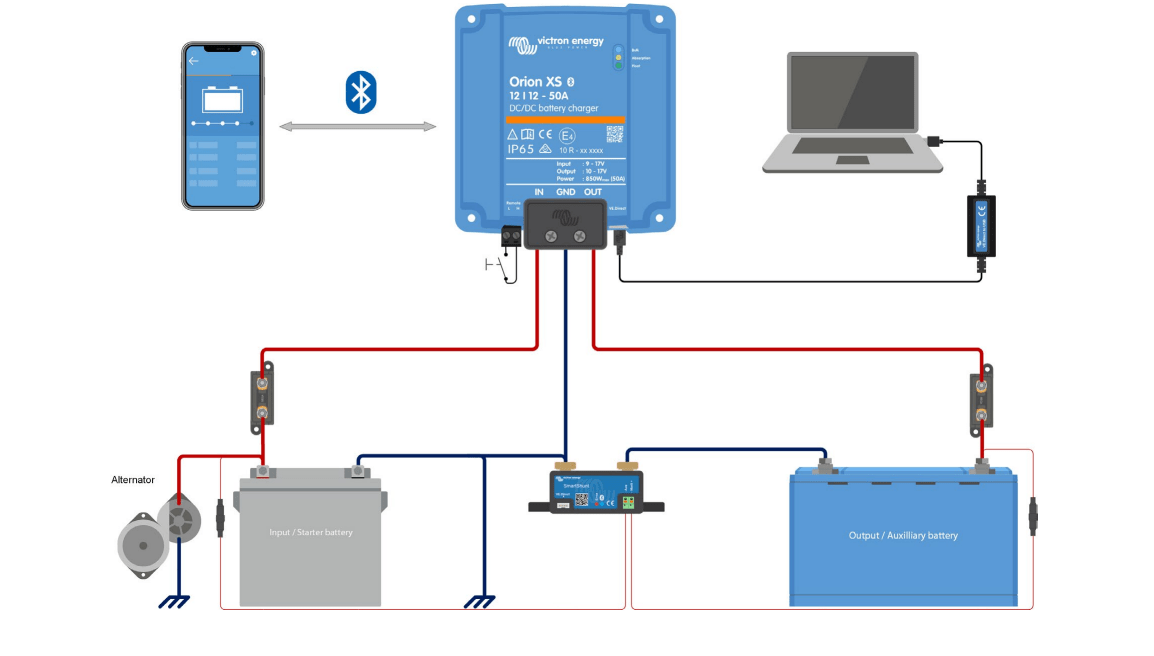
Firmware v1.15 for the Victron in the Orion XS range adds emergency reverse charging: the DC-DC charger recharges the starter battery from the auxiliary battery. Compatible models, how to activate it, limits and how to update.
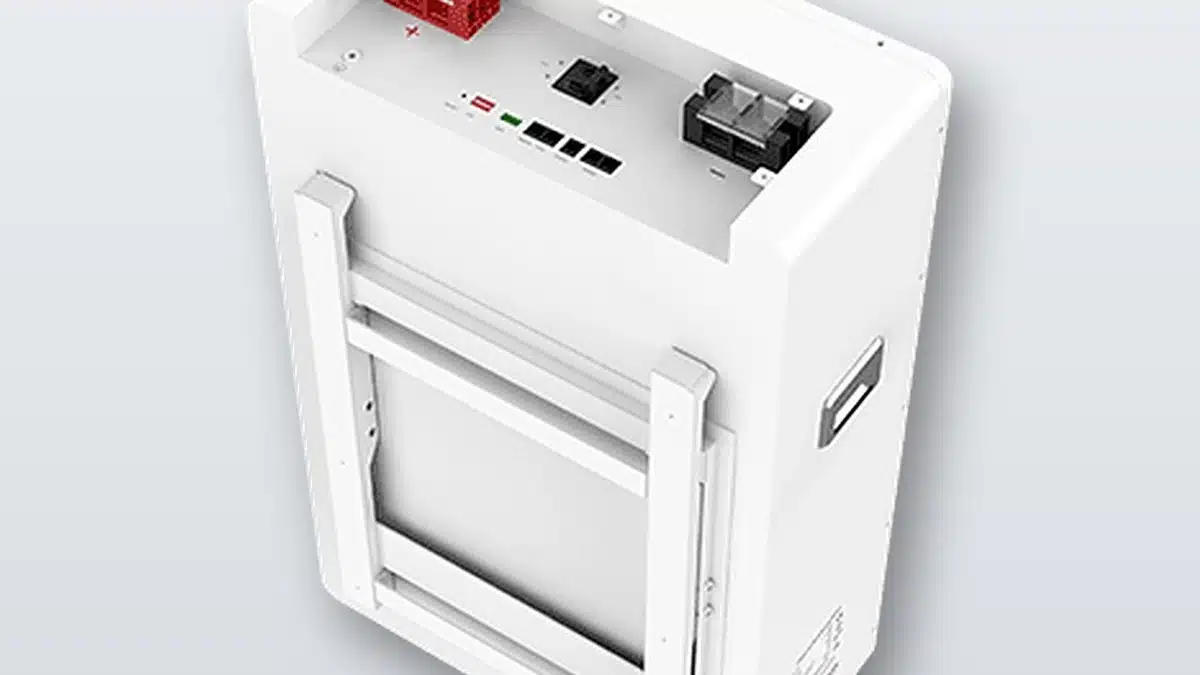
How to install and commission the BSLBATT B-LFP48-300PW 16 kWh wall-mounted battery: location, mounting, power and CAN/RS485 communication cabling, parallel connection, commissioning, alarms and maintenance.
A comparison of the five most prominent solar battery systems with a capacity of around 16 kWh on the Spanish market in 2026: usable capacity, power output, warranty, price excluding VAT and cost per kWh.
Official and verified list of inverters compatible with 48 V BSLBATT batteries: Victron, Studer, Deye, Solis, SolaX, Goodwe, SMA and more, with CAN or RS485 protocol.
We use our own and third-party cookies to obtain statistical data on our users' browsing habits, offer personalised marketing and improve our services.
Functional
Always active
The storage or technical access is strictly necessary for the legitimate purpose of enabling the use of a specific service explicitly requested by the subscriber or user, or for the sole purpose of carrying out the transmission of a communication over an electronic communications network.
Preferences
The technical storage or access is necessary for the legitimate purpose of storing unsolicited preferences of the subscriber or user.
Statistics
Technical storage or access that is used exclusively for statistical purposes.Technical storage or access that is used exclusively for anonymous statistical purposes. Without a request, voluntary compliance by your Internet Service Provider, or additional records from a third party, information stored or retrieved solely for this purpose cannot be used to identify you.
Marketing
Technical storage or access is necessary to create user profiles to send advertising, or to track the user across a website or across multiple websites for similar marketing purposes.